Residential Treatment & Collaborative Care
Explore how integrative residential treatment centers provide holistic care for individuals experiencing mental health crises and spiritual emergence.


Applies to Level 2 Certification
This course is part of the Level 2 Spiritual Emergence Coach® Certification. You can take this course individually or as part of the complete certification bundle. Upon completion, this course will count toward your Level 2 certification requirements.
About this course
This course provides a comprehensive overview of integrative residential care approaches for individuals experiencing mental health crises, including spiritual emergencies. You'll explore the philosophy, methods, and evidence behind holistic residential treatment.
Learn about groundbreaking programs that have successfully supported individuals through psychotic episodes and spiritual crises without heavy medication, using therapeutic community, complementary therapies, and holistic support instead.
This course challenges conventional psychiatric hospitalization models and presents alternatives that honor the healing potential of crisis experiences. You'll examine successful residential programs from around the world and learn how to evaluate and make referrals to appropriate facilities.
Perfect for Level 2 coaches who want to expand their knowledge of treatment options and be able to guide clients toward the most appropriate level of care when outpatient support is insufficient.
Learning Objectives

Understand the principles of integrative residential care for mental health
Compare traditional psychiatric facilities with integrative treatment approaches
Identify key components of holistic residential programs
Recognize when residential care is appropriate for spiritual emergency
Learn about successful integrative treatment centers worldwide
Make informed referrals to appropriate residential programs
Syllabus
Traditional vs. Integrative Approaches

 Limitations of conventional psychiatric hospitalization
- Core principles of integrative mental health care
- The role of spirituality in residential treatment
- Evidence for holistic approaches
Components of Integrative Residential Care
- Therapeutic community and peer support
- Complementary therapies: yoga, meditation, art, nature
- Nutritional psychiatry and functional medicine
- Medication management in holistic settings
- Spiritual practices and pastoral care
Case Studies: Successful Programs
- Diabasis House and Soteria projects
- Contemporary integrative treatment centers
- International models of holistic mental health care
- Outcomes research and effectiveness data
Assessment and Referral
- When to consider residential care
- Evaluating integrative treatment programs
- Making effective referrals
- Supporting clients during and after residential stay
Your Instructor
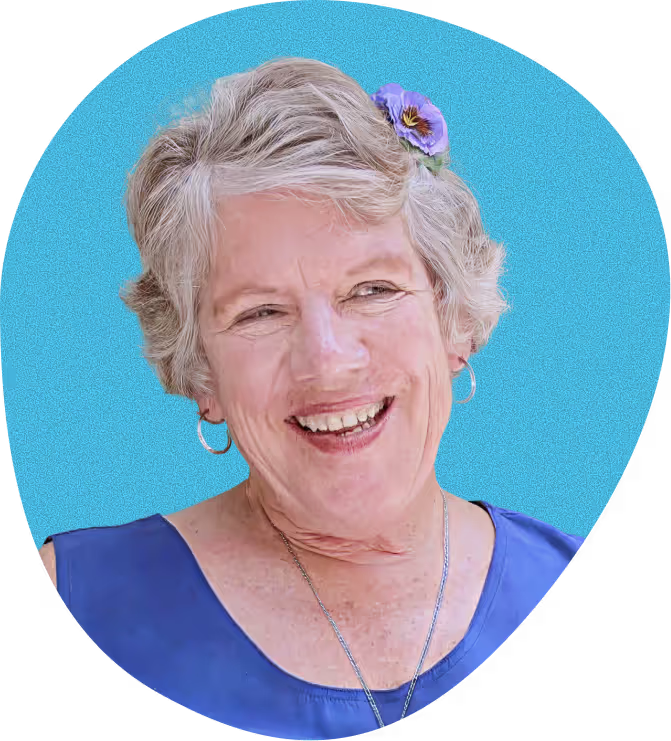
Emma Bragdon, PhD
Dr. Emma Bragdon is a pioneer in body–mind–spirit wellness with 50 years of experience in integrative approaches to mental health, healing, and human development. She has written seven books, co-produced two documentary films, and has taught experiential learning for adults since 1985. Emma volunteered with the Spiritual Emergence Network (SEN) for seven years, editing their journal and coordinating conferences at Esalen Institute with founders Stanislav and Christina Grof. Her PhD dissertation, "How to Support Someone in Spiritual Emergency," launched a lifelong specialization in this field. From 2001–2012, she conducted field research at Spiritist Community Centers and Psychiatric Hospitals in Brazil, studying their 120-year-old model of integrative care. Since 2012, she has served as "ambassador" to non-Brazilians for the Spiritist Psychiatric Hospital in Goiânia, Brazil, facilitating seminars for health professionals worldwide.
About Continuing Education Credits
For licensed health professionals seeking CE credits for license renewal

CE Provider Information
Level 2: CE credits are provided by Westbrook University, an APA-approved continuing education provider for healthcare professionals.
Level 2 Certification Courses
Explore all courses in the Level 2 certification pathway. Advance your expertise with specialized training in clinical assessment and ethical practice.
Residential Treatment & Collaborative Care
Explore how integrative residential treatment centers provide holistic care for individuals experiencing mental health crises and spiritual emergence.

Inner Ethics When Working with Non-Ordinary States
Develop ethical awareness and establish healthy boundaries when supporting clients through psychedelic experiences and non-ordinary states of consciousness.
How to Differentiate Spiritual Crisis from Pathology
Master the critical skills needed to distinguish between spiritual emergence and mental health conditions requiring different therapeutic approaches.
Screening for Spiritual Emergence
Receive a validated screening tool designed specifically for identifying spiritual emergence in clinical settings and private practice.
Psychosis: What is it?
Deepen your understanding of psychotic states and learn when spiritual experiences overlap with or differ from psychotic episodes.