


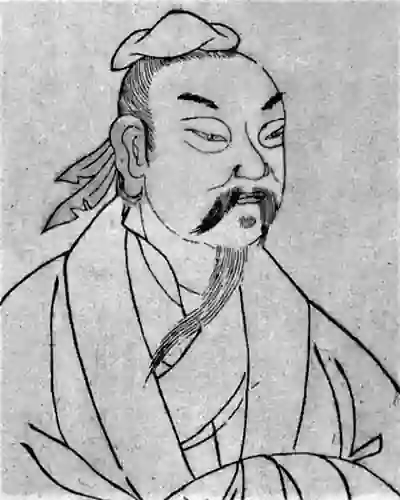
Who Is Zhuangzi
Zhuangzi (also known as Zhuang Zhou or Chuang Tzu) was a Chinese philosopher who lived around the 4th century BCE during the Warring States period—a time of political fragmentation and extraordinary philosophical creativity in China. He is traditionally credited as the author of the text bearing his name, the Zhuangzi, which alongside the Tao Te Ching is considered one of the two foundational texts of Taoism. Details of his life are sparse: the Han dynasty historian Sima Qian recorded that Zhuangzi was from the town of Meng in the state of Song, held a minor government post, turned down an offer to serve as a minister to the King of Chu because he valued his freedom, and was deeply influenced by Laozi’s thought—though his vision was far broader in scope.
What sets Zhuangzi apart from virtually every other philosopher of his era is how he philosophized. While Confucians, Mohists, and Legalists offered prescriptive systems for social harmony, Zhuangzi used humor, paradox, allegory, and parable to dismantle the very assumptions those systems were built on. His writing features talking skulls, a butcher whose knife never dulls because he cuts along the natural grain, a man who dreams he is a butterfly and wakes unsure which is real, and wind blowing through the "pipes of nature." The result is philosophy that reads more like literature—and that operates not by telling you what to think, but by loosening your grip on the certainties you already hold. His influence on Chan (Zen) Buddhism, Chinese poetry, landscape painting, and modern Western philosophy (from Hegel to Merton to Derrida) is difficult to overstate.
Core Concepts
- Wu wei: action without forcing
- Zhuangzi’s most practical teaching is wu wei—often translated as "non-action" or "effortless action." It doesn’t mean doing nothing; it means acting in alignment with the natural flow of things rather than imposing your will through rigid strategy or social convention. His exemplar is the butcher Ding, whose blade glides through an ox because he follows the natural structure of the animal rather than hacking against it. The spiritual application: stop muscling your way through life and learn to move with the grain of reality. (Wikipedia) (Stanford Encyclopedia of Philosophy)
- The relativity of perspective and the limits of language
- Zhuangzi argued relentlessly that our categories—good and bad, right and wrong, large and small, life and death—are human constructions, not features of reality itself. His butterfly dream is the most famous illustration: if you can dream you’re a butterfly so convincingly that you don’t know you’re dreaming, what makes waking life more "real"? He doesn’t resolve the paradox—that’s the point. Language, logic, and classification are useful tools, but they become prisons when we mistake them for the territory. (Britannica)
- The uselessness that is useful
- In several parables, Zhuangzi celebrates trees that survive because they’re too gnarled to be lumber, and people who thrive because they have no talents the state wants to exploit. The message: what conventional society considers "useless" may be exactly what preserves your life, your spirit, and your freedom. This concept inverts the achievement-oriented logic of both ancient Confucianism and modern productivity culture. (Internet Encyclopedia of Philosophy)
- Death as transformation, not catastrophe
- When Zhuangzi’s wife died, his friend Huizi found him drumming on a basin and singing. Zhuangzi explained that he had grieved at first, but then realized that life and death are simply phases in a continuous process of transformation—like the turning of the seasons. He didn’t deny grief; he placed it inside a larger frame. This teaching has profound relevance for anyone navigating loss, fear of death, or spiritual crisis.
- "Emptying the self" as the route to freedom
- Zhuangzi consistently advocates for loosening identification with your social roles, your opinions, your certainties—what he calls "fasting of the mind." This isn’t nihilism; it’s a therapeutic practice of clearing away the accumulated baggage of conditioning so you can respond to reality freshly rather than through the filter of inherited beliefs. The parallels with Buddhist emptiness teachings and modern contemplative psychology are striking.
Essential Writings
- Zhuangzi: The Essential Writings (trans. Brook Ziporyn)
- Widely considered the best modern scholarly translation. Ziporyn captures the humor, paradox, and philosophical depth of the text while providing extensive commentary that helps modern readers navigate Zhuangzi’s often elusive points. Includes the critical "Inner Chapters" (the seven chapters most likely written by Zhuangzi himself) plus key selections from the Outer and Miscellaneous chapters.
- Best use: the go-to edition for serious readers who want both accuracy and readability.
- Chuang Tzu: Basic Writings (trans. Burton Watson)
- Watson’s translation has been the gateway text for English-speaking readers since the 1960s. It’s more literary than scholarly—less annotation, more flow—which makes it ideal for a first encounter with the text. The language is clean and evocative, and Watson has a gift for rendering Zhuangzi’s parables in a way that lands emotionally.
- Best use: the best "first read"—especially for people who don’t yet know whether they care about Taoism.
- The Way of Chuang Tzu (Thomas Merton)
- Not a translation in the strict sense—Merton (a Trappist monk and contemplative writer) worked from multiple existing translations to create lyrical English renderings that bridge Eastern and Western contemplative traditions. The result is a deeply personal and spiritually resonant encounter with Zhuangzi’s ideas, filtered through one of the 20th century’s finest spiritual writers.
- Best use: for readers who come from a Western contemplative or Christian mystical background and want a bridge into Taoist thought.
- Wandering on the Way: Early Taoist Tales and Parables of Chuang Tzu (trans. Victor Mair)
- Mair’s complete translation is notable for its attention to the literary and narrative dimensions of the text. He treats the Zhuangzi as world literature, not just philosophy, and his notes situate it within the broader context of ancient Chinese culture and storytelling tradition.
- Best use: for readers who want the complete text and appreciate literary context as much as philosophical content.