


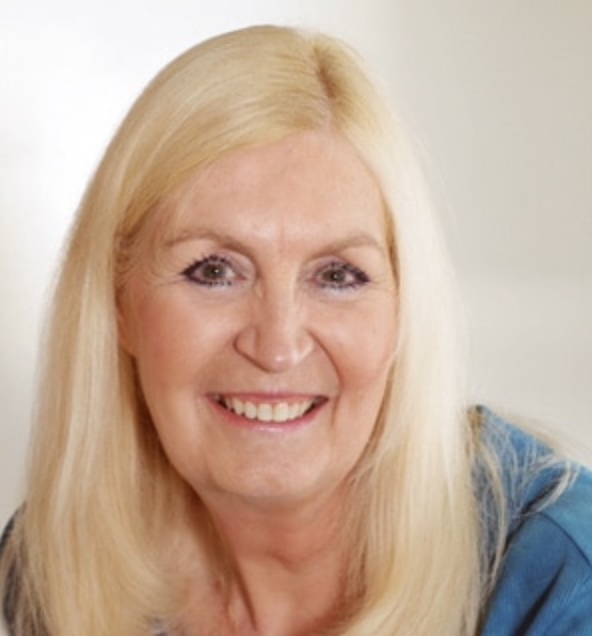
Who Is Yvonne Kason
Yvonne Kason is a Canadian family physician, transpersonal psychotherapist, author, and researcher who is widely recognized as one of the pioneering medical voices in the study of what she named "Spiritually Transformative Experiences" (STEs)—an umbrella term she coined in 1994 to encompass near-death experiences, mystical experiences, kundalini awakenings, psychic phenomena, death-related experiences, and inspired creativity. Born and raised in Toronto to European immigrant parents, she trained in family medicine at the University of Toronto and later earned a Master of Education. Her credentials include CCFP and FCFP designations, and she served on the faculty of the University of Toronto's Faculty of Medicine.
What sets Kason apart from most researchers in this space is that she is not studying these experiences from the outside. She has had five near-death experiences of her own—two in childhood and three as an adult—beginning with a dramatic 1979 medevac plane crash during her medical residency that produced a powerful out-of-body and white-light NDE. That experience, which she could not explain within the framework of her medical training, launched a lifelong quest to understand spiritual and anomalous experiences from both clinical and experiential perspectives. A kundalini awakening during medical school had already opened the door; the plane crash blew it off its hinges. In 1990, she became the first Canadian medical doctor to specialize her practice in the counseling and research of patients with NDEs and other STEs—a decision that required considerable professional courage at a time when mainstream medicine had little tolerance for such territory.
In 2003, Kason suffered a traumatic brain injury and another NDE in a fall, which left her unable to practice medicine, write, or speak publicly. She retired from medicine in 2006. Then, in 2016, during deep meditation at a Self-Realization Fellowship retreat in Encinitas, California, she experienced what she describes as a spontaneous brain healing—an eruption of inner light in the center of her brain that restored her cognitive function. She resumed writing and public speaking, producing two new books: Touched by the Light (2019) and Soul Lessons from the Light (2022). She served as President of the International Association for Near-Death Studies (IANDS) from 2019 to 2020, co-founded Spiritual Awakenings International (SAI) in 2020, and continues to lead that organization as its active president. She is a mother, grandmother, devoted yoga meditation practitioner, and speaks English, German, and French. (dryvonnekason.com)
Core Concepts
- "Spiritually Transformative Experiences" as a unifying framework
- Kason's most influential contribution is conceptual: the creation of a single, non-pathological umbrella term that gathers experiences previously siloed under separate labels—NDEs, mystical experiences, kundalini awakenings, psychic phenomena, death-related experiences, and inspired creativity—into one coherent category. Before Kason coined "Spiritually Transformative Experiences" in 1994, researchers and clinicians tended to study each type in isolation, and many used language that implicitly pathologized the experiencer. Her framework accomplished two things at once: it normalized these experiences by placing them on a shared spectrum, and it gave experiencers a non-clinical, non-stigmatizing vocabulary to describe what had happened to them. The term has since been adopted internationally by researchers, clinicians, and organizations including IANDS and ACISTE. (dryvonnekason.com)
- STEs as signs of healthy spiritual awakening, not mental illness
- A central clinical argument running through all of Kason's work is that STEs are not hallucinations, not psychotic symptoms, and not pathological. She insists, based on four decades of research and direct clinical experience, that they represent a normal and healthy expansion of human consciousness—what yogic traditions describe as the awakening of kundalini or the unfolding of higher states of awareness. This position has direct clinical implications: it means that the appropriate response to a patient reporting an STE is not medication or psychiatric hospitalization but informed, supportive counseling that helps the person integrate the experience. Kason's work parallels and complements the spiritual emergency framework developed by Stanislav and Christina Grof, while drawing more heavily on yogic and kundalini models.
- The kundalini–NDE connection
- Kason was among the first clinicians to draw explicit links between near-death experiences and kundalini awakening, arguing that both involve the same underlying mechanism of consciousness transformation. Her 1994 article in the Journal of Near-Death Studies explored these connections, and her subsequent books developed the idea further. She proposes what she calls the "Modern Kundalini Hypothesis"—a bio-psycho-spiritual model suggesting that kundalini energy is the biological mechanism underlying the transformation of consciousness that occurs in STEs of all types. This model integrates yogic theory with clinical observation and attempts to provide a framework broad enough to account for the full spectrum of STE phenomenology.
- STE after-effects as a long-term transformation process
- Kason's clinical work has documented extensively that a single powerful STE can launch a person into a years-long or lifelong process of transformation affecting body, mind, and spirit. These after-effects include physical changes (altered sleep patterns, increased sensitivities, metabolic shifts), psychological changes (abandoning unhealthy habits, stronger sense of life purpose, changed values and relationships), psychic changes (development of new intuitive or clairvoyant capacities), and spiritual changes (loss of fear of death, conviction about the reality of an afterlife, deepened connection to a Higher Power). She emphasizes that these after-effects are predictable, documentable, and—crucially—not pathological, though they can be deeply disorienting for people who have no framework for understanding them.
- The clinician as experiencer
- Kason's willingness to disclose her own extensive history of STEs—five NDEs, a kundalini awakening, and ongoing mystical experiences—is itself a significant contribution to the field. In a medical culture that prizes clinical detachment, her decision to "come out of the spiritual closet" (her phrase) modeled a different kind of professional integrity: one that treats personal experience as a legitimate source of clinical authority rather than a liability. This parallels Bill Richards's advocacy for therapists to have their own experience of non-ordinary states, and Winifred Lucas's insistence that regression therapists benefit from experiential familiarity with the territory they guide clients through.
Essential Writings
- Touched by the Light: Exploring Spiritually Transformative Experiences (2019)
- Kason's most comprehensive and systematic work. A synthesis of forty years of clinical research on STEs—their types, subtypes, phenomenology, after-effects, and implications for understanding human consciousness. Filled with case studies from her clinical practice and grounded in her six-category taxonomy of STEs, this is the closest thing to a clinical handbook for professionals and experiencers alike.
- Best use: the essential starting point—the single best overview of Kason's framework, research findings, and clinical approach. Read this first.
- Farther Shores: Exploring How Near-Death, Kundalini and Mystical Experiences Can Transform Ordinary Lives (2000, 2008)
- The expanded and revised edition of Kason's groundbreaking 1994 book A Farther Shore, where she first coined the term "Spiritually Transformative Experiences." It remains the foundational text for understanding her thinking about the relationship between NDEs, kundalini awakening, and mystical experience—and for her argument that these experiences represent a healthy, if often turbulent, process of spiritual evolution.
- Best use: the historical anchor—read this to understand the intellectual origins of Kason's framework and to encounter her earliest thinking about the STE concept in its most developed form.
- Soul Lessons from the Light: How Spiritually Transformative Experiences Changed My Life (2022)
- Kason's most personal book—a memoir of her own spiritual awakening journey, from her kundalini awakening in medical school through her five NDEs, her traumatic brain injury, her unexpected healing, and the ongoing mystical experiences that have shaped her life and work. Introduces her "Purifying the Heart" model of the stages of spiritual growth and awakening.
- Best use: for readers who want to understand Kason not just as a researcher but as a person whose entire life has been shaped by the phenomena she studies—an unusually intimate account from a physician-experiencer.
- "Investigation of the phenomenology, physiology and impact of spiritually transformative experiences – kundalini awakening" (2020, Explore)
- A peer-reviewed research article co-authored with Marjorie Woollacott and Russell Park, investigating the phenomenology, physiology, and impact of kundalini awakening experiences. Represents Kason's most recent contribution to the formal research literature and an important step toward bringing empirical rigor to a domain that has historically relied on case reports and clinical observation.
- Best use: the academic entry point for researchers and clinicians who want Kason's work in a peer-reviewed format.