


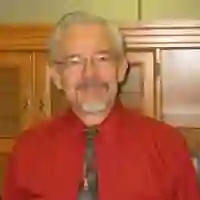
Who Is William A. Richards
William A. Richards (known as Bill) is a clinical psychologist in the Department of Psychiatry at the Johns Hopkins University School of Medicine, Bayview Medical Center, and one of the longest-serving researchers in the history of psychedelic science. His involvement with psilocybin research began in 1963 as a graduate student working with Hanscarl Leuner at Georg-August University in Göttingen, Germany. From 1967 to 1977, he conducted psychotherapy research with LSD, DPT, MDA, and psilocybin at the Maryland Psychiatric Research Center, developing protocols for treating alcoholism, depression, narcotic addiction, and the psychological distress of terminal cancer patients. When the political climate shut down virtually all psychedelic research in the United States, Richards was, as colleagues have noted, essentially the last person still doing legal clinical work with these substances. (Psychwire)
What makes Richards uniquely important is the combination of his scientific rigor and his theological depth. His graduate degrees include an M.Div. from Yale Divinity School, an S.T.M. from Andover-Newton Theological School, and a Ph.D. from Catholic University, along with studies under Abraham Maslow at Brandeis. In 1999, he and Roland Griffiths launched the revival of psilocybin research at Johns Hopkins after a twenty-two-year hiatus—a program that has since produced some of the most influential findings in modern psychiatry, including landmark studies showing that psilocybin can reliably occasion mystical-type experiences with lasting positive effects on personality, mood, and behavior. Richards brings to this work a rare capacity to hold both the empirical and the sacred: he takes the phenomenology of mystical experience seriously as data while insisting on the methodological standards that make the findings credible to mainstream medicine. His book Sacred Knowledge has been compared to William James's Varieties of Religious Experience as a landmark at the intersection of psychology and religion. (MAPS)
Core Concepts
- Mystical experience as a measurable clinical variable
- Richards and his Johns Hopkins colleagues demonstrated that psilocybin can reliably produce mystical-type experiences—characterized by unity, transcendence of time and space, noetic quality, sacredness, deeply felt positive mood, and ineffability—and that these experiences are strongly correlated with lasting therapeutic benefit. This finding transformed mystical experience from a vague spiritual concept into a measurable outcome variable in clinical research, with the Mystical Experience Questionnaire (MEQ) as the primary instrument. (Journal of Humanistic Psychology)
- Set, setting, and the therapist's role
- Richards has spent decades refining the art of psychedelic-assisted psychotherapy: careful screening, thorough preparation, a physically comfortable and aesthetically considered treatment room, curated music programs, and—crucially—the steady, non-anxious presence of trained therapists who can accompany someone through the full range of psychedelic experience without interfering. His protocols emphasize that the drug is not the therapy; it's a catalyst within a carefully constructed interpersonal and environmental container. My take: this is where Richards's contribution is most irreplaceable—he developed the clinical craft, not just the research design.
- Psychedelics and end-of-life care
- Some of Richards's most powerful clinical work has been with terminally ill cancer patients experiencing existential distress. The Johns Hopkins and earlier Maryland studies showed that psilocybin-assisted therapy could produce sustained decreases in anxiety and depression, increased engagement with life, and—strikingly—a loss of the fear of death in patients who experienced transcendental states of consciousness during sessions. This research builds on earlier work with LSD and DPT in the 1960s and 70s and represents one of the most promising applications of psychedelic medicine. (Psychwire Q&A)
- The theology-psychology bridge
- Richards's dual training in theology and psychology gives him a framework that most psychedelic researchers lack. He can engage seriously with religious and mystical traditions (Christian mysticism, Buddhist phenomenology, the perennial philosophy) while remaining anchored in empirical research methods. His work argues implicitly that the psychology of religion is not a soft subfield but a frontier where some of the most important questions about consciousness, meaning, and human flourishing converge.
- Experiential knowledge in therapist training
- Richards has advocated that therapists working with psychedelics benefit enormously from their own experience of non-ordinary states of consciousness—whether through psychedelics, deep meditation, or other means. A therapist who has personally navigated the territory is less likely to become anxious and more able to remain present and centered when a patient enters unfamiliar psychological terrain. This position has implications well beyond psychedelic therapy: it touches on the broader question of whether clinicians working with spiritual experiences need some experiential reference point of their own.
Essential Writings
- Sacred Knowledge: Psychedelics and Religious Experiences
- Richards's major work, published by Columbia University Press in 2015 and now translated into multiple languages. It synthesizes nearly three decades of legal clinical research into a sophisticated account of how psychedelics affect consciousness, facilitate mystical experiences, and can be used responsibly in therapeutic and spiritual contexts. It's both a scientific summary and a deeply personal reflection on the meaning of transcendent experience.
- Best use: the single best book for understanding the intersection of psychedelic research and the psychology of religion—essential for clinicians, researchers, chaplains, and anyone interested in the evidence for psychedelic-occasioned mystical experience.
- "Psychedelic Psychotherapy: Insights from 25 Years of Research" (Journal of Humanistic Psychology, 2017)
- A major article presenting clinical insights and perspectives from Richards's quarter-century of research experience, originally presented at the Psychedelic Science 2013 conference. Covers the phenomenology of psychedelic experience, therapeutic protocols, the role of mystical consciousness in clinical outcomes, and the implications of the psychedelic renaissance for psychology and psychiatry.
- Best use: a concise professional-level overview for clinicians and researchers who want Richards's clinical wisdom without the full book-length treatment.
- "Implications of LSD and Experimental Mysticism" (with Walter Pahnke, 1966)
- Richards's first publication, co-authored with the researcher who conducted the famous Good Friday Experiment. A foundational paper that helped establish the conceptual framework for studying psychedelic-occasioned mystical experience—the intellectual starting point for everything that followed at Johns Hopkins decades later.
- Best use: historical context for the field—shows how far back the research lineage goes and how consistent the core questions have remained.