


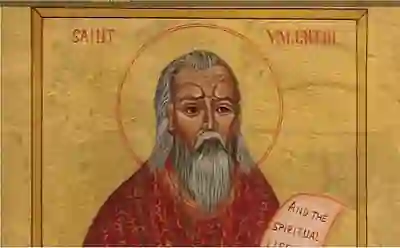
Who Is Valentinus
Valentinus (c. 100–c. 180 CE) was an Egyptian-born Christian philosopher, teacher, and mystic who founded what became the most influential Gnostic movement in the ancient world. Born in the Nile Delta region, he received a thorough Hellenistic education in Alexandria—the intellectual capital of the Mediterranean—where he encountered Platonic philosophy, Jewish allegorical interpretation, and the teachings of earlier Gnostic thinkers like Basilides. His followers claimed he had been taught by Theudas, a disciple of the apostle Paul, giving his lineage an apostolic pedigree. Around 136 CE he moved to Rome, where he became a prominent Christian teacher and, by some accounts, nearly became bishop of Rome. When he was passed over for the position, he began developing his own theological school—though notably, he was never formally condemned as a heretic during his own lifetime. His movement spread across the Roman Empire from North Africa to Syria and remained active into the 4th century. (Wikipedia)
What makes Valentinus relevant to IMHU’s mission is not the specifics of his cosmological system (which is elaborate and mythologically dense) but what that system does: it treats inner, experiential knowledge—gnosis—as the primary path to spiritual liberation, and it frames the human condition as one of forgetfulness and alienation from a deeper divine reality. Valentinus saw myths (including Christian ones) not as literal history but as allegories for psychological and spiritual truths, anticipating by nearly two millennia the approach of depth psychology and symbolic interpretation. His insistence that salvation comes through direct experience rather than institutional authority or doctrinal conformity resonates with virtually every contemplative and transpersonal tradition that IMHU engages. The discovery of Valentinian texts at Nag Hammadi in 1945—including the Gospel of Truth, which many scholars attribute to Valentinus himself—transformed our understanding of early Christian diversity and made his thought accessible in ways that centuries of suppression had prevented. (Britannica)
Core Concepts
- Gnosis as direct experiential knowledge
- The core of Valentinian teaching is that salvation comes not through belief, moral conduct, or institutional belonging but through gnosis—a direct, transformative knowing of one’s true nature and relationship to the divine. This is not intellectual knowledge but experiential awakening: the moment when a person recognizes that their deepest self is a “divine spark” temporarily alienated from its source. The psychological parallel to this is striking—it maps onto what transpersonal psychology calls “spiritual awakening” and what many contemplative traditions describe as the recognition of one’s true nature.
- Myth as psychological allegory
- Valentinus treated the elaborate Gnostic cosmology—the Pleroma (divine fullness), the Aeons (divine emanations), the fall of Sophia (Wisdom), the ignorant Demiurge who creates the material world—not as literal cosmological history but as symbolic language for inner realities. The fall of Sophia represents the soul’s descent into forgetfulness and attachment; the Demiurge represents the ego’s mistaken belief that it is the ultimate authority; the return to the Pleroma represents the reintegration of the self with its deepest ground. This allegorical approach anticipates Jung’s reading of Gnostic myths as maps of the psyche. (Gnosticism Explained)
- Three types of human nature
- Valentinus taught that people fall into three broad categories: the hylics (material, identified entirely with the body), the psychics (soul-oriented, capable of faith and moral effort), and the pneumatics (spiritual, capable of gnosis). While this sounds like rigid predestination, in practice the Valentinians actively ministered to all types and seem to have believed that spiritual development was possible—that gnosis was available to those who sought it. The framework is less a caste system than a developmental model of spiritual maturity.
- The material world as flawed but not evil
- Unlike more radical Gnostic systems that regarded matter as inherently evil, Valentinus offered a more nuanced view: the material world was created by a lesser, ignorant being (the Demiurge) but was not deliberately malicious—it was the product of confusion and limitation, not malice. This subtlety matters because it allows for engagement with the world rather than pure ascetic withdrawal. Valentinians married, had families, and participated in ordinary social life, holding worldly pursuits lightly while prioritizing inner transformation.
- The bridal chamber and spiritual union
- Valentinian sacramental practice included a ritual called the “bridal chamber,” which symbolized the reunification of the separated aspects of the self—the human spirit with its divine counterpart, the individual soul with the Pleroma. Whether this was purely symbolic or involved actual ritual practice is debated, but the underlying teaching—that the goal of the spiritual life is the healing of a fundamental inner division—resonates with Jungian individuation, the mystical traditions of union (Christian, Sufi, Hindu), and contemporary psychospiritual work on integration and wholeness.
Essential Writings
- The Gnostic Gospels (Elaine Pagels)
- The book that brought Gnostic Christianity to a mainstream audience. Pagels explores the Nag Hammadi texts (many of which are Valentinian or Valentinian-influenced) and argues that early Christianity was far more diverse than the orthodox tradition acknowledged. Readable, provocative, and still the best entry point for non-specialists.
- Best use: the accessible starting point for anyone who wants to understand what Gnostic Christianity was, why it mattered, and why it was suppressed.
- The Gnostic Scriptures (Bentley Layton)
- A scholarly anthology that includes Valentinian texts alongside other Gnostic writings, with careful introductions and annotations. Layton’s translations are rigorous and his historical context is invaluable. Includes the fragments attributed to Valentinus himself and key texts from his school.
- Best use: the serious reference for anyone who wants to read Valentinian texts firsthand with scholarly apparatus—more demanding than Pagels but far more complete.
- The Nag Hammadi Scriptures (ed. Marvin Meyer)
- The most complete modern English translation of the Nag Hammadi library, including the Gospel of Truth, the Gospel of Philip, the Tripartite Tractate, and other Valentinian-influenced texts. Meyer’s introductions are accessible and his translations are designed for both scholars and general readers.
- Best use: the comprehensive primary source collection—essential if you want to read the actual texts rather than just read about them.
- The Gospel of Truth (attributed to Valentinus)
- Many scholars believe this poetic, meditative text was written by Valentinus himself. It describes the human condition as a state of forgetfulness and ignorance, and presents the coming of Christ as the restoration of knowledge and the return to the divine fullness. It reads less like theology and more like contemplative poetry—which is exactly what makes it valuable for people interested in the experiential dimension of early Christianity.
- Best use: read it as a meditation text, not a doctrinal treatise. Available in multiple translations within the Nag Hammadi collections listed above.