


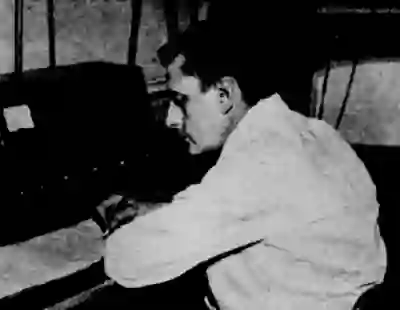
Who Is Stanley Krippner
Stanley Krippner (born 1932) is an American psychologist and parapsychologist who has been one of the most prolific and wide-ranging investigators of human consciousness for over sixty years. He received his PhD from Northwestern University in 1961 and spent most of his career as the Alan Watts Professor of Psychology at Saybrook University in Oakland, California (1972–2019), where he trained generations of graduate students in humanistic and transpersonal approaches to psychology. Before Saybrook, he directed the Maimonides Medical Center Dream Research Laboratory in Brooklyn (1964–1972), where he and Montague Ullman conducted the most systematic experimental studies of dream telepathy ever attempted—research that remains controversial but has never been definitively refuted.
Krippner’s relevance to IMHU’s mission is threefold. First, he has been one of the most persistent advocates for taking anomalous experiences seriously within academic psychology—not as proof of the supernatural, but as data that any comprehensive model of consciousness must account for. Second, his cross-cultural research on shamanism and indigenous healing practices helped bring non-Western approaches to consciousness and healing into the conversation of Western psychology at a time when most academics dismissed them outright. Third, his work on dreams—not just telepathic dreams but the full range of extraordinary dream experiences including creative problem-solving, precognitive, and healing dreams—provides a rich empirical foundation for understanding the clinical and transformative potential of dream work. He has authored or co-authored over 1,000 peer-reviewed articles and dozens of books, served as president of the Parapsychological Association and the Association for Humanistic Psychology, and received lifetime achievement awards from multiple international organizations. His work is not without controversy—the dream telepathy experiments have been criticized for methodological weaknesses, and some of his endorsements of psychic phenomena have drawn sharp criticism—but his overall contribution to the scientific study of consciousness is substantial and enduring.
Core Concepts
- Dreams as a window into anomalous cognition
- Krippner’s most famous research involved the Maimonides dream telepathy experiments, in which a "sender" concentrated on a randomly selected image while a "receiver" slept in a monitored sleep lab. Independent judges then rated the correspondence between the dream reports and the target images. The results showed statistically significant correlations that could not be easily explained by chance—though critics have pointed to potential methodological flaws, and independent replication has been inconsistent. Regardless of one’s position on telepathy, the research demonstrated that dreams are far richer and more informationally complex than conventional psychology assumed, and opened the door to serious scientific study of extraordinary dream experiences. (Wikipedia)
- Altered states of consciousness as legitimate objects of study
- Throughout his career, Krippner has argued that altered states—including those induced by meditation, psychedelics, hypnosis, sensory deprivation, drumming, and indigenous ritual practices—are not pathological aberrations but natural variations in human consciousness that deserve systematic investigation. He helped develop taxonomies of altered states and advocated for methodologies that could study them rigorously without reducing them to their neurochemical correlates.
- Cross-cultural approaches to healing and shamanism
- Krippner conducted extensive fieldwork with shamans, curanderos, and traditional healers across multiple cultures—including work in Brazil, Mexico, and with Native American practitioners. His approach was neither credulous nor dismissive: he documented healing practices with scientific rigor while respecting their cultural context and acknowledging that Western biomedicine does not have a monopoly on effective approaches to suffering. His work helped legitimize the academic study of indigenous healing within psychology.
- Personal mythology as a framework for psychological growth
- With David Feinstein, Krippner developed the concept of "personal mythology"—the idea that each person operates according to a set of deep, often unconscious narratives that shape their perception, behavior, and sense of meaning. Therapeutic work involves identifying these myths, understanding where they conflict or have become outdated, and consciously revising them. This framework bridges depth psychology, narrative therapy, and transpersonal psychology.
- The integration of humanistic, transpersonal, and anomalistic psychology
- Krippner has consistently worked to build bridges between humanistic psychology (with its emphasis on human potential and subjective experience), transpersonal psychology (with its focus on spiritual and transcendent experiences), and anomalistic psychology (which studies unusual experiences whether or not they have paranormal explanations). His vision is of a psychology capacious enough to include the full range of human experience without either dismissing it or abandoning scientific rigor.
Essential Writings
- Dream Telepathy (with Montague Ullman and Alan Vaughan)
- The definitive account of the Maimonides dream telepathy experiments—detailed, methodical, and honest about both the strengths and limitations of the research. Essential reading for anyone interested in the scientific investigation of anomalous dream experiences.
- Best use: for researchers and serious students who want to evaluate the dream telepathy evidence for themselves.
- Personal Mythology (with David Feinstein)
- A practical guide to identifying and revising the deep narratives that shape your life. Combines depth psychology, transpersonal perspectives, and experiential exercises into a usable framework for self-exploration.
- Best use: for therapists and individuals who want a structured approach to working with the stories that unconsciously drive their lives.
- Extraordinary Dreams and How to Work with Them (with Fariba Bogzaran and André Percia de Carvalho)
- A comprehensive survey of extraordinary dream types—lucid, telepathic, precognitive, healing, creative, and spiritual—with practical guidance for working with them therapeutically and for personal growth.
- Best use: the best single resource for clinicians and dream workers who encounter unusual dream experiences in their practice.