


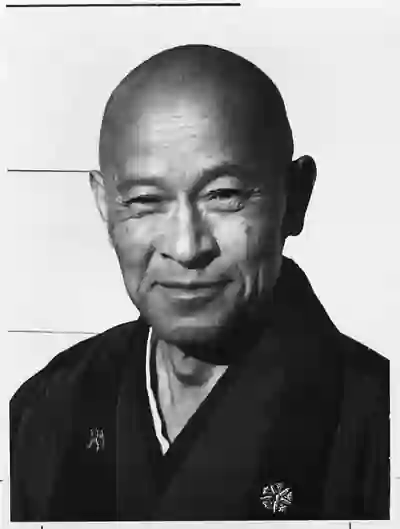
Who Is Shunryu Suzuki
Shunryu Suzuki (1904–1971) was a Japanese Sōtō Zen priest who came to San Francisco in 1959 and—almost without intending to—became one of the most important Zen teachers in American history. He founded the San Francisco Zen Center, established Tassajara Zen Mountain Center (the first Zen monastery in the Western hemisphere), and attracted a devoted community of American students who were drawn to his gentle, unpretentious, and profoundly grounded style of teaching. He died of cancer in 1971, leaving behind a small body of teachings—mostly transcribed talks—that have had an outsized influence on how Westerners understand and practice Zen.
Suzuki’s relevance to IMHU’s mission lies in the quality of attention he brought to the relationship between meditation and everyday life. Unlike more dramatic or charismatic teachers, Suzuki emphasized ordinariness: the practice is just sitting (shikantaza), just breathing, just being present with what is. His teaching on “beginner’s mind” (shoshin)—the attitude of openness, curiosity, and lack of preconceptions—has become one of the most widely referenced concepts in Western mindfulness and has influenced clinical approaches to meditation, psychotherapy, and stress reduction. Suzuki didn’t promise enlightenment or extraordinary experiences; he offered something harder and more useful: a way of meeting each moment with fresh attention. His quiet insistence that practice and enlightenment are not two different things—that sitting itself is the expression of Buddha-nature—cuts through much of the spiritual ambition and achievement-orientation that can distort contemplative practice.
Core Concepts
- Beginner’s mind (shoshin): Suzuki’s most famous teaching. The beginner’s mind is open, eager, free of preconceptions—“In the beginner’s mind there are many possibilities, but in the expert’s there are few.” This is not about being ignorant; it’s about maintaining the quality of fresh perception that experts tend to lose. Clinically, beginner’s mind describes the attitude that makes genuine listening, empathy, and presence possible. It’s also a powerful antidote to the spiritual materialism of treating meditation as an achievement to be mastered. (Wikipedia)
- Shikantaza (just sitting): The Sōtō Zen practice of sitting meditation without any particular object, technique, or goal. You don’t try to achieve anything—you just sit, upright and aware, and allow whatever arises to arise. Suzuki taught that this practice is not a means to enlightenment but the expression of enlightenment itself. This reframe—practice as expression rather than acquisition—is deeply liberating for people who have turned meditation into another performance or self-improvement project.
- Practice and enlightenment are one: Suzuki consistently taught that there is no gap between practice and realization. You don’t practice now in order to become enlightened later; the act of sitting with full presence is the enlightened activity. This teaching dissolves the anxious striving that can plague meditators and reframes the spiritual path not as a journey to a destination but as a way of being that is available right now.
- The importance of posture and form: Suzuki placed enormous emphasis on physical posture, ritual form, and the details of daily practice—not because they’re magic but because caring for the details of how you sit, how you eat, how you walk through a door is itself the practice of mindfulness. The body is not separate from the mind; how you hold your body expresses and shapes your state of consciousness.
- Not always so — the flexibility within form: While emphasizing form and discipline, Suzuki also taught that nothing is fixed. “Not always so” was one of his characteristic phrases—a reminder that every teaching, every experience, every identity is provisional and should be held lightly. This prevents Zen practice from becoming rigid or dogmatic and keeps beginner’s mind alive even within established forms.
Essential Writings
- Zen Mind, Beginner’s Mind (1970): The only book published during Suzuki’s lifetime, compiled from his talks by Trudy Dixon. It’s one of the most beloved and widely read books on Zen in any language—brief, clear, and endlessly quotable. Best use: the single best introduction to Suzuki’s teaching and to the spirit of Zen practice. If you read one Zen book, make it this one.
- Not Always So: Practicing the True Spirit of Zen (2002, posthumous): A second collection of Suzuki’s talks, edited by Edward Espe Brown. It covers many of the same themes as Zen Mind but with different emphases and a slightly more advanced treatment. Best use: the natural follow-up to Zen Mind, Beginner’s Mind—deeper, more nuanced, and equally rewarding.
- Branching Streams Flow in the Darkness (1999, posthumous): Suzuki’s commentary on the Sandokai, a fundamental Zen text on the relationship between the absolute and the relative. Best use: for readers ready to engage with Zen philosophy at a more technical level.
- Crooked Cucumber: The Life and Zen Teaching of Shunryu Suzuki (by David Chadwick, 1999): A warm, detailed biography that places Suzuki’s teaching in the context of his life—his training in Japan, his marriage, his illness, and his profound impact on American Zen. Best use: the best way to understand Suzuki as a person and to see how his teaching emerged from his lived experience.