


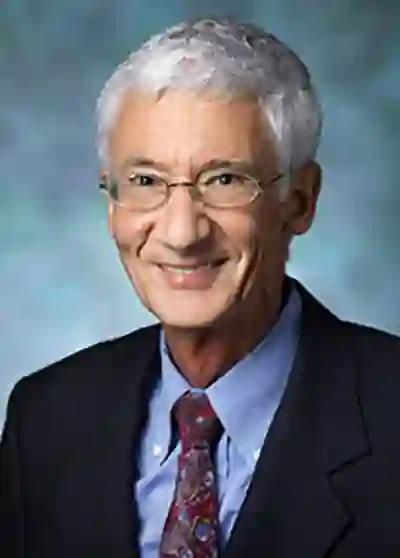
Who Is Roland R. Griffiths
Roland R. Griffiths (1946–2023) was an American psychopharmacologist and professor at Johns Hopkins University School of Medicine who is widely credited with restarting rigorous, federally approved psychedelic research in the United States after a decades-long hiatus. Trained as a behavioral pharmacologist, Griffiths spent the first half of his career studying the abuse potential of caffeine, sedatives, and other drugs using gold-standard clinical methodology. In the early 2000s, influenced by his own meditation practice and a growing interest in consciousness, he turned his formidable scientific skills toward psilocybin—the active compound in psychedelic mushrooms.
His 2006 study, published in Psychopharmacology, was the first well-controlled clinical trial to demonstrate that psilocybin could reliably occasion mystical-type experiences in healthy volunteers—and that these experiences produced lasting positive changes in mood, attitude, and behavior. The study was a turning point: it showed the mainstream scientific establishment that psychedelic experiences could be studied rigorously, that they were not inherently dangerous when properly supervised, and that they had genuine therapeutic potential. Griffiths went on to lead landmark studies on psilocybin for end-of-life anxiety and depression in cancer patients, for treatment-resistant depression, and for smoking cessation. He founded the Johns Hopkins Center for Psychedelic and Consciousness Research in 2019. Diagnosed with late-stage colon cancer, he spent his final years publicly discussing how his own research on meaning, mortality, and consciousness helped him face death—bringing his scientific and contemplative lives into remarkable alignment.
Core Concepts
- Mystical-type experiences as measurable, meaningful psychological events: Griffiths’s most important contribution was demonstrating that mystical experiences—characterized by unity, transcendence of time and space, sacredness, noetic quality, and deeply felt positive mood—can be reliably produced in laboratory settings and measured with validated instruments (the Mystical Experience Questionnaire). He showed that these experiences are not rare curiosities but reproducible psychological events with lasting consequences. This work provided empirical validation for what William James described phenomenologically a century earlier. (Wikipedia)
- Psilocybin as a tool for studying consciousness, not just treating illness: While Griffiths’s clinical trials demonstrated therapeutic applications, he consistently emphasized that psilocybin’s deeper significance lies in what it reveals about human consciousness itself. He argued that the capacity for mystical experience appears to be a fundamental feature of the human mind, and that studying it could illuminate questions about meaning, spirituality, and well-being that conventional neuroscience has largely ignored.
- Set and setting as determinants of outcome: Griffiths’s protocols exemplified the principle that the context of a psychedelic experience profoundly shapes its quality and outcome. His studies featured careful preparation, comfortable physical settings, trained guides, eyeshades and music, and thorough integration sessions. The reliability and safety of his results demonstrated that the framework around the experience matters as much as the compound itself.
- Lasting positive personality change: In follow-up studies, Griffiths found that a single high-dose psilocybin session could produce increases in the personality trait of Openness that persisted for more than a year—a finding remarkable in personality psychology, where traits are generally considered stable after early adulthood. Participants also reported sustained increases in life satisfaction, meaning, and spiritual significance. These findings suggest that psychedelic-occasioned experiences can produce durable psychological change, not just transient altered states.
- The convergence of science and contemplation: Griffiths was unusual among psychedelic researchers in having a sustained personal meditation practice. He came to psilocybin research partly through his own contemplative experience, and he was open about the fact that his scientific work and his inner life informed each other. His final public reflections on facing death with equanimity, informed by both science and practice, modeled the integration of empirical and experiential knowledge that IMHU’s mission requires.
Essential Writings
- “Psilocybin Can Occasion Mystical-Type Experiences” (Psychopharmacology, 2006): The landmark study that relaunched psychedelic science. Best use: the essential primary source for understanding what Griffiths demonstrated and why it mattered.
- “Psilocybin Produces Substantial and Sustained Decreases in Depression and Anxiety in Patients with Life-Threatening Cancer” (Journal of Psychopharmacology, 2016): One of two parallel studies (with NYU’s Stephen Ross) showing psilocybin’s remarkable efficacy for existential distress in cancer patients. Best use: the key clinical evidence for psilocybin’s therapeutic potential in end-of-life care.
- “Mystical-Type Experiences Occasioned by Psilocybin Mediate the Attribution of Personal Meaning and Spiritual Significance 14 Months Later” (Journal of Psychopharmacology, 2008): The follow-up demonstrating that the effects of a single session persist over a year. Best use: evidence that psychedelic experiences produce durable, not just transient, change.
- Roland Griffiths’s public talks and interviews (2022–2023): In his final year, Griffiths gave several deeply moving public reflections on consciousness, mortality, gratitude, and meaning. Best use: the most personal expression of what his work meant to him—and a model of integrating science, practice, and human vulnerability.