


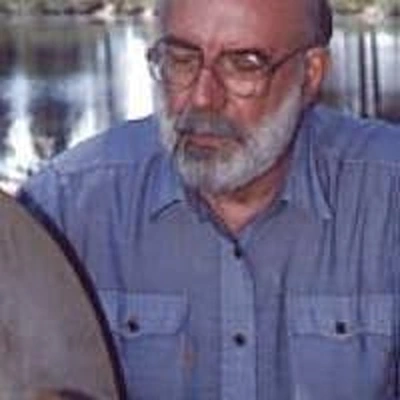
Who Is Michael Harner
Michael Harner (1929–2018) was an American anthropologist who became the most influential figure in the modern revival and cross-cultural study of shamanism. Trained at the University of California, Berkeley, and Columbia University, Harner conducted fieldwork among the Jivaro (Shuar) of the Ecuadorian Amazon and the Conibo of Peru in the 1950s and 1960s. During his time with the Conibo, he participated in ayahuasca ceremonies and had experiences that fundamentally altered his understanding of consciousness and the nature of reality—shifting his orientation from detached observer to engaged practitioner. He held faculty positions at the New School for Social Research, Columbia, and Yale before ultimately leaving conventional academia to devote himself fully to the study and teaching of shamanic practices.
In 1980, Harner founded the Foundation for Shamanic Studies (FSS) and published The Way of the Shaman, which became a bestseller and introduced a global audience to what he called “core shamanism”—a distillation of the common elements found across indigenous shamanic traditions worldwide, stripped of culture-specific content and made accessible to modern Western practitioners. Core shamanism centers on the shamanic journey: a technique of entering an altered state of consciousness (typically through rhythmic drumming rather than psychoactive substances) to access information, healing, and guidance from non-ordinary reality. Harner’s work has been both enormously influential and genuinely controversial. Supporters credit him with preserving and democratizing shamanic knowledge at a time when indigenous traditions were under threat; critics—including some indigenous practitioners and anthropologists—argue that extracting techniques from their cultural contexts produces a diluted, commodified, and potentially appropriative practice. Both assessments contain truth, and Harner himself acknowledged the tension while maintaining that the core techniques belong to humanity’s shared heritage.
Core Concepts
- Core shamanism: universal techniques beneath cultural variation
- Harner’s central thesis is that beneath the enormous cultural diversity of shamanic traditions lies a common set of practices—particularly the shamanic journey through altered states of consciousness—that recur across unrelated cultures and historical periods. He proposed that these “core” techniques can be learned and practiced by anyone, regardless of cultural background, and that their effectiveness is experiential, not dependent on any particular belief system. (Wikipedia)
- The shamanic journey as a practical skill
- Harner taught the shamanic journey as a repeatable, trainable technique: the practitioner lies down, listens to steady rhythmic drumming, and enters a visionary state in which they travel to “non-ordinary reality”—typically described as Lower, Middle, and Upper Worlds—to obtain healing, information, or power. He insisted this was not metaphor or imagination but a genuine mode of perception with verifiable results, and he developed structured training programs to teach it systematically.
- The shaman as “wounded healer” and community servant
- Drawing on cross-cultural evidence, Harner emphasized that the shaman’s role is fundamentally one of service—healing the sick, recovering lost souls, mediating between the human community and the spirit world. He distinguished this service orientation from both New Age consumerism and clinical detachment, positioning the shamanic practitioner as someone who has undergone their own crisis and transformation and uses that experience to help others.
- The controversy of decontextualization (and why it matters)
- Harner’s project—extracting universal techniques from specific cultural traditions—is both his greatest contribution and his greatest vulnerability. Critics argue that shamanic practices are inseparable from the cosmologies, languages, ecological knowledge, and community structures within which they developed, and that teaching them as standalone techniques risks both superficiality and cultural appropriation. This debate remains unresolved and is important for anyone engaging with neo-shamanic practice.
Essential Writings
- The Way of the Shaman
- Harner’s foundational text: part autobiography, part anthropological survey, part practical manual. It introduces the core shamanic journey technique, presents cross-cultural evidence for shamanic practices, and provides step-by-step instructions for beginning practitioners. It remains the most widely read introduction to shamanic practice in any language.
- Best use: the essential starting point. Read it with both openness and critical awareness—the practices are powerful, and the questions about decontextualization are real.
- Cave and Cosmos: Shamanic Encounters with Another Reality
- Harner’s late-career summation: drawing on over 50,000 reports from shamanic journey workshops, he presents evidence for the consistency and verifiability of shamanic experiences across cultures and individuals. It is his most ambitious attempt to argue that shamanic journeying accesses a real (not merely psychological) domain of experience.
- Best use: for readers who have already practiced the techniques and want to understand the larger picture Harner drew from decades of data.
- Hallucinogens and Shamanism (editor)
- An anthology of anthropological essays on the role of psychoactive plants in indigenous shamanic traditions. Published in 1973, it was one of the earliest academic collections to take the subject seriously and includes contributions from leading ethnobotanists and anthropologists.
- Best use: essential background for understanding the relationship between plant medicines and shamanic practice—and the historical context from which Harner’s later work emerged.