


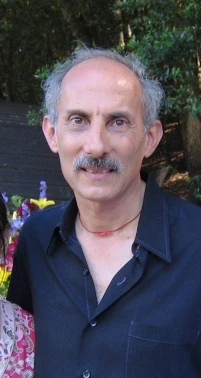
Who Is Jack Kornfield
Jack Kornfield (born 1945) is an American author, teacher, and clinical psychologist who played a central role in bringing Southeast Asian Buddhist meditation practices to the United States. After studying as a Buddhist monk in Thailand, Burma, and India during the late 1960s and early 1970s, he returned to the West and co-founded two of the most important meditation centers in America: the Insight Meditation Society (IMS) in Barre, Massachusetts, and Spirit Rock Meditation Center in Woodacre, California. He also holds a PhD in clinical psychology, and this dual training—monastic and clinical—gives his work a distinctive quality. (Wikipedia)
What makes Kornfield especially relevant to IMHU’s mission is his early and persistent recognition that meditation practice can open psychological wounds that pure dharma teaching isn’t equipped to address, and that Western psychology can illuminate dimensions of suffering that traditional Buddhist frameworks sometimes overlook. He was one of the first prominent meditation teachers to say openly that enlightenment experiences don’t automatically resolve trauma, addiction, or relational dysfunction—and that integrating spiritual opening with psychological healing is essential, not optional. This insight is now widely accepted, but when Kornfield began saying it in the 1980s, it was controversial in both Buddhist and psychological circles.
Core Concepts
- “After the ecstasy, the laundry” — integration as the real practice: The title of one of his best-known books captures Kornfield’s signature teaching: spiritual highs, peak experiences, and even deep awakenings don’t exempt you from the ordinary work of being human. Relationships still need tending, emotions still need processing, and old patterns still need confronting. He argues that the real measure of spiritual development isn’t the intensity of your experiences but the quality of your daily life. This is enormously useful for people navigating spiritual emergency or post-retreat psychological disruption.
- The integration of meditation and psychotherapy: Kornfield was a pioneer in arguing that mindfulness practice and psychotherapy are complementary, not competing approaches. Meditation can develop concentration, equanimity, and insight, but it often can’t reach the relational, developmental, and trauma-based dimensions of suffering that psychotherapy addresses. Conversely, therapy alone may not open the deeper dimensions of meaning, purpose, and connection that contemplative practice can access. His model—use both, and use them wisely—has become standard in integrative mental health.
- The heart practices — loving-kindness, compassion, joy, equanimity: While many Western mindfulness programs emphasize concentration and bare attention, Kornfield consistently foregrounds the brahmavihārās—the four “divine abodes” of loving-kindness (mettā), compassion (karuṇā), appreciative joy (muditā), and equanimity (upekkā). He teaches these not as abstract ideals but as trainable capacities that directly address the emotional suffering most people bring to practice. This emphasis on the heart, not just the mind, distinguishes his approach from more austere mindfulness styles.
- Storytelling as dharma teaching: Kornfield is a masterful storyteller, and his books are woven with tales from Buddhist tradition, his own life, and the experiences of his students. This isn’t decoration—it’s method. Stories convey emotional and spiritual truths that abstract instruction often misses, and they help people feel less alone in their struggles. His narrative style makes complex dharma accessible without dumbing it down.
- Forgiveness and the release of the past: A major theme across Kornfield’s work is forgiveness—not as a moral obligation or a spiritual bypass, but as a practical process of releasing the grip that past hurts have on your present life. He teaches forgiveness practices for oneself, for others, and for life itself, and he’s honest about how difficult and gradual the process is. This teaching has particular relevance for trauma survivors and for people whose spiritual lives have been entangled with guilt, shame, or religious harm.
Essential Writings
- A Path with Heart: A Guide Through the Perils and Promises of Spiritual Life (1993): His masterwork and one of the most widely recommended books in Western Buddhist practice. It covers the full arc of spiritual life—from initial awakening through the inevitable difficulties, dark nights, and integrations that follow. Best use: the essential guidebook for anyone serious about contemplative practice who also wants to stay psychologically grounded.
- After the Ecstasy, the Laundry: How the Heart Grows Wise on the Spiritual Path (2000): Based on interviews with teachers and practitioners from many traditions, this book explores what happens after awakening—the humbling, human work of integrating spiritual insight into everyday life. Best use: the best available book on spiritual integration, and a powerful antidote to the fantasy that enlightenment solves everything.
- The Wise Heart: A Guide to the Universal Teachings of Buddhist Psychology (2008): A comprehensive guide to Buddhist psychology organized for Western readers. It covers perception, emotion, consciousness, and the path of transformation with both traditional depth and clinical sensitivity. Best use: the most thorough bridge between Buddhist psychology and Western clinical thinking that Kornfield has written.
- No Time Like the Present: Finding Freedom, Love, and Joy Right Where You Are (2017): A more accessible, later-career book that distills decades of teaching into reflections on presence, aging, meaning, and the art of showing up for your own life. Best use: a warm, wise companion for people who want the essence of Kornfield’s teaching without the full Buddhist framework.
Image Attribution
"Jack Kornfield.jpg" (photo: Marcy Harbut), via Wikimedia Commons, licensed CC BY 2.0. Link: https://commons.wikimedia.org/wiki/File%3AJack_Kornfield.jpg