


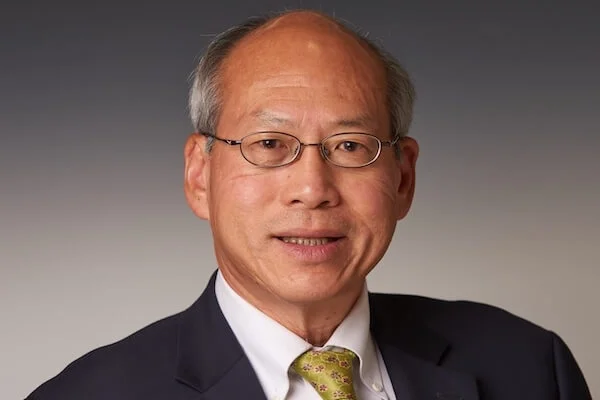
Who Is Francis Lu, MD
Francis Lu, MD is the Luke and Grace Kim Professor in Cultural Psychiatry, Emeritus, at the University of California, Davis, where he served as Director of Cultural Psychiatry and Associate Chair for Medical Student Education before retiring in 2013 after 36 years of clinical service, teaching, and research at UCSF and UC Davis. He is best known as the co-author, with David Lukoff, PhD and Robert Turner, MD, of the proposal that introduced "Religious or Spiritual Problem" (V62.89) as a diagnostic category in DSM-IV in 1994—a landmark shift in how American psychiatry officially addresses spiritual experience in clinical settings.
Lu's career reflects a consistent and integrative vision: that cultural competency and spiritual competency are not separate domains but overlapping dimensions of the same fundamental clinical skill—the ability to meet patients within their own meaning-making frameworks. He has been recognized with multiple American Psychiatric Association honors, including the 2020 Distinguished Service Award, a Lifetime Achievement Award from the Society for the Study of Psychiatry and Culture, and APA Special Presidential Commendations in both 2002 and 2016 for his contributions to cultural psychiatry. Since 1987 he has also led or co-led 37 intensive film seminars at Esalen Institute in Big Sur, California, 28 of them co-led with the Benedictine monk and interfaith activist Brother David Steindl-Rast between 1990 and 2016—using cinema as a vehicle for developing the kind of cross-cultural and spiritual sensitivity that clinical training rarely cultivates through conventional means. He is a particularly important figure for IMHU because his work has directly addressed the interface between religion, spirituality, and clinical mental health care from within the mainstream of academic psychiatry.
Core Concepts
- Religion and spirituality as cultural domains: Lu's core argument, maintained throughout his career, is that religious and spiritual experience belongs under the broad umbrella of cultural competency in clinical training—not as a niche specialty but as an integral dimension of understanding the patient as a whole person. He has consistently observed that clinicians who lack literacy in patients' spiritual and religious frameworks are unable to conduct a complete assessment, build effective therapeutic alliance, or design treatment that draws on patients' actual strengths and resources. Spirituality, on his account, is not optional background information—it is clinical data.
- The DSM Religious or Spiritual Problem category: The Z code (originally V62.89) that Lu helped introduce into DSM-IV creates diagnostic space for distressing experiences related to loss or questioning of faith, conversion, joining or leaving religious groups, or the destabilizing quality of spiritually transformative experiences—without attributing these to mental disorder. Lu continued advocating for this category through subsequent DSM iterations, and has described his concern that accreditation standards for US psychiatry residency programs remain weak in this area, leaving residents ill-equipped to engage the spiritual dimensions of clinical care.
- The Cultural Formulation Interview: Lu was instrumental in developing the DSM-5 Outline for Cultural Formulation and the Cultural Formulation Interview (CFI)—a structured clinical tool designed to help practitioners elicit information about patients' cultural identity, concepts of distress, psychosocial stressors, and the cultural features of the therapeutic relationship. The CFI's inclusion of religion and spirituality as explicit domains of inquiry represents a concrete operationalization of his broader argument that cultural and spiritual factors must be systematically incorporated into clinical assessment.
- Cinema as a teaching tool for cultural and spiritual sensitivity: One of Lu's most distinctive contributions has been his use of film as a pedagogical resource for cultivating cultural competency and spiritual awareness in clinical training. His decades of film seminars at Esalen—covering topics from cultural identity and racial equity to spiritual experience and the meaning of suffering—reflect his belief that great cinema can transmit forms of human understanding that textbooks cannot reach. His favorite film for this purpose is Akira Kurosawa's Ikiru (1952), a meditation on mortality, meaning, and the possibility of transformation late in life.
- Mental health equity and structural cultural competency: Lu's clinical work at UCSF and UC Davis included the development of culturally specialized inpatient treatment units serving women, Latino, Black, LGBTQ, and Asian American patients—an early model of what is now called structural cultural competency in psychiatric care. His research and advocacy on mental health disparities, combined with his work on the DSM's cultural formulation framework, reflects a consistent conviction that diagnostic systems must be culturally sensitive to be clinically valid, and that populations underserved by mainstream psychiatry are often those for whom cultural and spiritual frameworks are most central to healing.
Essential Writings
- "Toward a More Culturally Sensitive DSM-IV: Psychoreligious and Psychospiritual Problems" (1992, with David Lukoff and Robert Turner, Journal of Nervous and Mental Disease): The foundational paper establishing the clinical and epidemiological case for the Religious or Spiritual Problem V-code. Best use: the essential primary source for understanding the argument that reshaped official psychiatric nosology, and still the best introduction to the theoretical framework Lu and his colleagues developed.
- Religious and Spiritual Issues in Psychiatric Diagnosis: A Research Agenda for DSM-V (2011, co-edited with John R. Peteet and William E. Narrow): A scholarly volume gathering contributions from leading clinicians and researchers examining the implications of religious and spiritual factors for psychiatric classification across diagnostic categories. Best use: the most comprehensive academic resource on the spirituality-psychiatry diagnostic interface, suitable for researchers and educators who want the full evidence base.
- francislumd.com — Resource lists and presentations: Lu maintains extensive publicly available resources on cultural psychiatry, the DSM-5 Cultural Formulation Interview, religion and spirituality in psychiatric training, and diversity in academic medicine. Best use: the most current and direct access to his thinking, including recommended teaching textbooks, curated film lists, and training resources that can be integrated into clinical and psychiatric residency curricula.