


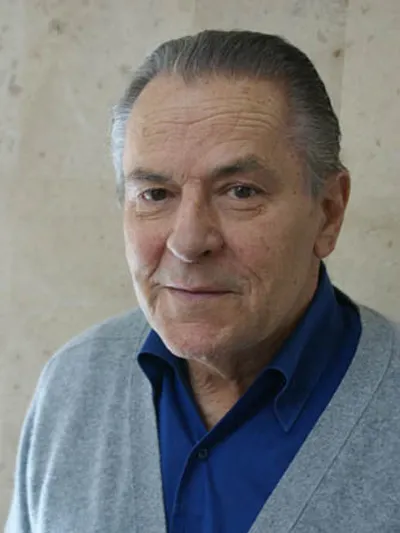
Who Is Stanislav Grof
Stanislav Grof (1931–2024) was a Czech-born psychiatrist and researcher who spent more than six decades exploring non-ordinary states of consciousness and their therapeutic potential. Beginning in the late 1950s at the Psychiatric Research Institute in Prague, Grof conducted some of the earliest systematic clinical research with LSD, supervising over 4,000 psychedelic sessions. When psychedelics were banned in the United States in the early 1970s, he developed Holotropic Breathwork—a powerful breathing technique combined with music and bodywork that can produce altered states comparable to those induced by psychedelics. He co-founded the International Transpersonal Association and was a founding faculty member at Esalen Institute and the California Institute of Integral Studies.
Grof’s relevance to IMHU’s mission is direct and foundational. He was among the first clinicians to argue systematically that many experiences psychiatry labels as psychotic—visions, ego dissolution, encounters with archetypal figures, reliving of birth trauma—can be healing and transformative if properly supported. His concept of "spiritual emergency" (developed with his wife Christina Grof) gave clinicians a framework for distinguishing transformative crisis from pathological breakdown, and it remains one of the most practically useful ideas in the field. His cartography of the psyche—which maps perinatal, biographical, and transpersonal domains of experience—expanded the clinical map far beyond what conventional psychiatry acknowledges, providing language and structure for working with the full range of human consciousness.
Core Concepts
- The cartography of the psyche — biographical, perinatal, and transpersonal: Grof’s most enduring contribution is his expanded map of the human psyche. Beyond the biographical level (personal memories and Freudian material), he identified a perinatal level (experiences related to the birth process, organized into four "Basic Perinatal Matrices") and a transpersonal level (experiences that transcend ordinary boundaries of self—past-life memories, archetypal encounters, cosmic consciousness, identification with other beings). This three-level map gives clinicians a framework for working with experiences that conventional psychology has no place for. (Wikipedia)
- Spiritual emergency: Developed with Christina Grof, this concept distinguishes between spiritual emergence (a gradual, manageable process of spiritual opening) and spiritual emergency (an overwhelming crisis that can look like psychosis but is actually a transformative process). The key clinical implication: if you can support someone through a spiritual emergency rather than simply suppressing it with medication, the outcome is often lasting positive change. This framework remains central to IMHU’s educational mission.
- The Basic Perinatal Matrices (BPMs): Grof proposed that the birth process leaves deep imprints on the psyche, organized into four matrices: BPM I (oceanic unity in the womb), BPM II (cosmic engulfment as contractions begin), BPM III (the death-rebirth struggle through the birth canal), and BPM IV (death-rebirth—emergence into light and freedom). He found that psychedelic and breathwork sessions often replay these patterns, and that their resolution can produce profound psychological healing. Whether interpreted literally or metaphorically, the BPMs provide a remarkably useful clinical map.
- COEX systems (Systems of Condensed Experience): Grof observed that memories and emotions in the psyche are not stored in isolation but organized into clusters—COEX systems—that share a common emotional theme or physical sensation. A COEX system might link a childhood trauma, a birth experience, and a transpersonal vision through a shared feeling of suffocation or abandonment. This concept helps explain why a single therapeutic session can release material from multiple levels of the psyche simultaneously.
- The healing potential of non-ordinary states: Grof’s overarching argument is that non-ordinary states of consciousness—whether induced by psychedelics, breathwork, meditation, or spontaneous crisis—have an inherent healing intelligence. The psyche, given the right conditions, will move toward its own resolution. The therapist’s job is not to direct the process but to provide safety, support, and trust in the organism’s self-healing capacity. This principle has deeply influenced modern psychedelic-assisted therapy protocols.
Essential Writings
- Realms of the Human Unconscious: Observations from LSD Research (1975): Grof’s first major English-language book, presenting his cartography of the psyche based on thousands of LSD sessions. It introduced the perinatal matrices and transpersonal domains to a Western clinical audience. Best use: the foundational text for understanding Grof’s model—dense but essential.
- The Adventure of Self-Discovery (1988): A comprehensive guide to Grof’s therapeutic approach, covering both LSD therapy and Holotropic Breathwork. It includes detailed descriptions of the perinatal matrices and practical guidance for facilitators. Best use: the most complete single-volume overview of Grof’s clinical method.
- Spiritual Emergency: When Personal Transformation Becomes a Crisis (1989): Co-edited with Christina Grof, this anthology includes contributions from multiple authors on the spiritual emergency concept. It remains the primary reference for clinicians trying to distinguish transformative crisis from pathology. Best use: the essential clinical resource on spiritual emergency—start here if that’s your main interest.
- Psychology of the Future (2000): Grof’s attempt to synthesize his life’s work into a coherent vision of what psychology could become if it took the full range of human experience seriously. It covers his cartography, the implications for therapy, and the broader cultural significance of non-ordinary states. Best use: the best late-career overview—more accessible than the earlier technical works.
- The Way of the Psychonaut (2019): A two-volume magnum opus that represents Grof’s most comprehensive and final statement of his entire body of work. Best use: the definitive reference for serious students of Grof’s approach—encyclopedic in scope.