


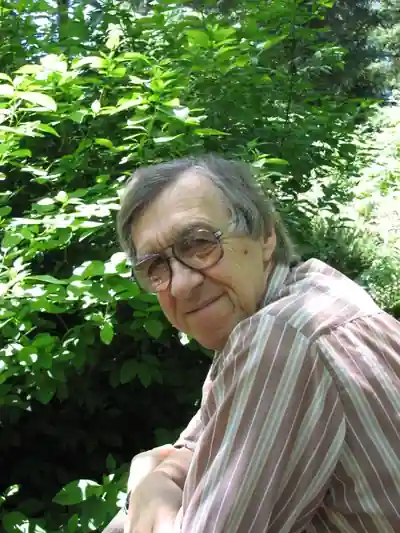
Who Is Charles T. Tart
Charles T. Tart (born 1937) is an American psychologist and parapsychologist who has been one of the most important figures in the scientific study of consciousness, altered states, and transpersonal psychology since the 1960s. Tart earned his PhD in psychology from the University of North Carolina at Chapel Hill and spent the majority of his career at the University of California, Davis, where he was a professor for over thirty years. He also held positions at Stanford and the Institute of Transpersonal Psychology (now Sofia University). His 1969 anthology Altered States of Consciousness was the first major academic collection on the subject and became a standard textbook in psychology programs worldwide.
Tart’s distinctive contribution has been his insistence that consciousness—including its non-ordinary manifestations (dreams, meditation, hypnosis, psychedelic states, out-of-body experiences, and psi phenomena)—can and should be studied with scientific rigor, but that doing so requires expanding the methods of science rather than dismissing the phenomena because they don’t fit existing paradigms. He coined the concept of “state-specific sciences”—the idea that certain kinds of knowledge can only be acquired and validated from within specific states of consciousness, much as certain observations in physics require specific instruments. This was a radical methodological proposal: not abandoning science, but extending it. Tart’s work spans an unusual range: rigorous laboratory studies of hypnosis, ESP, and out-of-body experiences alongside theoretical work on the nature of consciousness, the psychology of waking “consensus trance” (his term for ordinary socialized awareness), and the integration of Western science with contemplative traditions.
Core Concepts
- Altered states of consciousness as legitimate objects of scientific study
- Tart’s foundational contribution was establishing that non-ordinary states of consciousness—including dreams, meditation, hypnosis, and psychedelic experiences—deserve the same rigorous scientific attention as ordinary waking consciousness. His 1969 anthology and subsequent books helped create the academic field of consciousness studies and gave researchers a framework for taking these phenomena seriously without abandoning empirical method. (Wikipedia)
- State-specific sciences
- Tart proposed that certain phenomena can only be observed, understood, and validated from within the state of consciousness in which they occur. Just as a microscope reveals realities invisible to the naked eye, specific states of consciousness may grant access to domains of experience that are invisible from ordinary waking awareness. This concept challenges the assumption that all valid knowledge must be obtainable from the default waking state.
- “Consensus trance”: ordinary consciousness as a culturally conditioned state
- Tart argued that what we consider “normal” waking consciousness is itself an altered state—a “consensus trance” shaped by cultural conditioning, social reinforcement, and habitual patterns of attention. This reframing implies that meditation, therapy, and other practices are not departures from reality but attempts to wake up from a collectively maintained perceptual narrowing.
- Parapsychology as frontier science, not pseudoscience
- Throughout his career, Tart has maintained that the evidence for psi phenomena (telepathy, clairvoyance, precognition, psychokinesis) meets the standards required for serious scientific attention, even if the phenomena remain unexplained within current theoretical frameworks. He has conducted laboratory studies on ESP and remote viewing and has been a vocal critic of the a priori dismissal of parapsychological research by mainstream science.
Essential Writings
- Altered States of Consciousness (editor)
- The landmark 1969 anthology that established the academic study of non-ordinary states. It brings together research on dreaming, hypnosis, meditation, psychedelic experiences, and other altered states, providing the first comprehensive scientific framework for the field.
- Best use: a foundational text—still valuable for understanding how the scientific study of consciousness was framed in its early years.
- Waking Up: Overcoming the Obstacles to Human Potential
- Tart’s most accessible book: an exploration of how “consensus trance” limits human awareness and potential, with practical guidance for becoming more conscious in daily life. It bridges scientific psychology, Gurdjieff’s work on self-observation, and mindfulness practice.
- Best use: the best entry point for general readers—practical, readable, and immediately applicable to everyday life.
- The End of Materialism: How Evidence of the Paranormal Is Bringing Science and Spirit Together
- Tart’s most comprehensive argument that the evidence from parapsychology, near-death experiences, and consciousness research points toward a reality that materialism cannot fully account for. He reviews the data systematically and argues for a “wider science” that includes consciousness as a fundamental aspect of reality.
- Best use: for readers interested in the scientific case for non-materialist worldviews—Tart engages the evidence carefully and honestly.
Image Attribution
“Charles Tart.jpg” by Judy Tart, via Wikimedia Commons, licensed CC BY-SA 4.0. Link: https://commons.wikimedia.org/wiki/File%3ACharles_Tart.jpg