


Summary
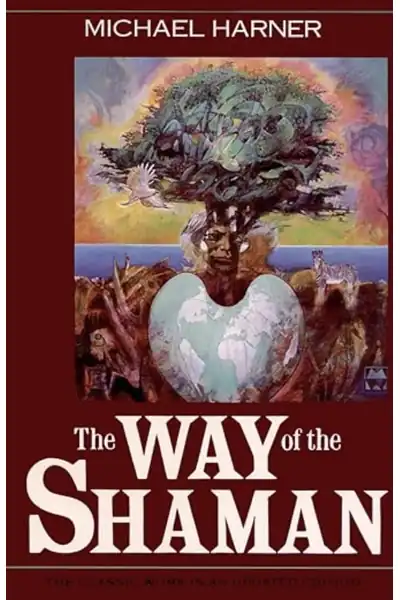
In "The Way of the Shaman," Michael Harner—an anthropologist who spent decades studying indigenous healing traditions across South America, North America, and Asia—makes a radical move that distinguishes this book from virtually every other academic treatment of shamanism: he stops studying shamanism from the outside and invites the reader to practice it from the inside. First published in 1980, the book introduced what Harner called "core shamanism"—the universal, cross-cultural elements of shamanic practice stripped of their culture-specific forms—and made these practices accessible to contemporary Westerners. The result was one of the most influential and most debated books in the modern history of consciousness exploration.
Harner's central claim is that shamanism isn't a primitive superstition that science has outgrown but a sophisticated technology of consciousness that humanity has been developing and refining for tens of thousands of years. The shamanic journey—in which the practitioner enters an altered state of consciousness, typically through rhythmic drumming, to access non-ordinary reality for healing and guidance—represents what may be humanity's oldest and most widespread spiritual practice. Harner argues that this practice works: that it produces genuine healing, genuine knowledge, and genuine contact with dimensions of reality that materialist science doesn't acknowledge. For IMHU's community, this book matters because it challenges the assumption that non-ordinary states of consciousness are inherently pathological and presents them instead as potentially therapeutic, informative, and accessible through disciplined practice rather than mental breakdown.
From Anthropology to Practice
Harner's journey from academic observer to shamanic practitioner began during fieldwork with the Jívaro people of the Ecuadorian Amazon in the early 1960s. When his informants told him he could never truly understand their healing practices without experiencing them directly, he agreed to participate in a ceremony involving the psychoactive brew ayahuasca. What followed was an experience so vivid, so structured, and so unlike anything his academic training had prepared him for that it fundamentally altered his understanding of consciousness and reality. He encountered beings and landscapes that his hosts recognized immediately from their own experience—a shared phenomenology of non-ordinary reality that defied explanation as mere hallucination.
This experience catalyzed a decades-long investigation into the common elements of shamanic practice across cultures. Harner discovered that beneath the enormous cultural variation in shamanic traditions—different costumes, different songs, different mythologies—lay a remarkably consistent set of techniques and experiences. The use of rhythmic percussion to alter consciousness. The experience of journeying to "upper" and "lower" worlds populated by helping spirits and power animals. The retrieval of healing power and knowledge from non-ordinary reality for application in ordinary reality. The encounter with spiritual beings who provide guidance, healing, and protection. These elements appeared in traditions separated by thousands of miles and thousands of years, suggesting they reflected something universal about human consciousness rather than the peculiarities of any single culture. Harner's decision to extract these universal elements and teach them as "core shamanism" was both his most significant contribution and his most controversial one.
The Shamanic Journey as Technology of Consciousness
The heart of the book is Harner's detailed, practical instruction in the shamanic journey—a method for entering a specific altered state of consciousness that he called the Shamanic State of Consciousness (SSC). Unlike psychedelic-induced states, the SSC is typically entered through monotonous percussion—steady drumming at approximately four to four and a half beats per second—which research has shown induces theta brainwave activity associated with hypnagogic and visionary states. The practitioner lies down, sets a clear intention for the journey, and follows the drumbeat into an inner landscape that feels qualitatively different from ordinary imagination or daydream.
Harner is careful to distinguish the shamanic journey from both ordinary fantasy and psychotic hallucination. The journey has a volitional quality—the practitioner can direct their attention, ask questions, and return to ordinary consciousness at will. It produces consistent, structured experiences that shamanic practitioners across cultures would recognize. And it generates information and healing effects that the practitioner couldn't have produced through ordinary cognitive processes. Whether one interprets this as contact with genuine spiritual realities, access to unconscious wisdom through symbolic imagery, or something else entirely, the practical utility of the method is difficult to dismiss. Thousands of contemporary practitioners report that shamanic journeying provides guidance, emotional healing, and insights that they find valuable and that often prove accurate in ways that surprise them. For clinicians, this raises an important question: if a practice consistently produces therapeutic benefit, does it matter whether its practitioners' ontological claims are scientifically validated?
Power Animals and Helping Spirits
A central element of shamanic practice as Harner describes it is the relationship with helping spirits—typically encountered as power animals, nature spirits, or ancestral guides. In the shamanic worldview, these are not metaphors or psychological projections but autonomous beings with their own intelligence, personality, and agency. The shaman's effectiveness as a healer depends on the strength and quality of their relationships with these spiritual allies. A shaman without power animals is, in traditional understanding, vulnerable to illness and unable to help others—a concept that Harner found remarkably consistent across the indigenous traditions he studied.
For modern Westerners trained in materialist thinking, this is often the most difficult aspect of shamanic practice to accept. The idea that one can form a genuine relationship with a spiritual being encountered in an altered state of consciousness challenges fundamental assumptions about what is real. Harner's approach is pragmatic rather than dogmatic: try the practice and evaluate the results. Many of his students—including physicians, psychotherapists, and scientists—report that their encounters with helping spirits produce insights, emotional shifts, and sometimes physical healing effects that they cannot easily explain through conventional psychological frameworks. Whether these spirits are understood as aspects of the unconscious mind, as autonomous beings in a non-physical dimension, or as something our current categories can't capture, the relationships people form with them appear to have real therapeutic value. This pragmatic orientation—focusing on what works rather than insisting on a particular metaphysical explanation—makes Harner's approach surprisingly compatible with clinical perspectives that prioritize patient outcomes.
Shamanic Healing and Western Medicine
Harner devotes significant attention to shamanic healing methods, including power animal retrieval, soul retrieval, and extraction healing. In the shamanic framework, illness can result from the loss of personal power (often represented by the departure of a power animal), the loss of soul parts (fragments of the self that split off during traumatic experiences), or the intrusion of harmful spiritual energies. These diagnoses may sound exotic, but they map onto psychological concepts that any trauma therapist would recognize. Soul loss closely parallels dissociation. Power loss resembles the depletion and disconnection that characterize depression. Spiritual intrusion mirrors the experience of being taken over by emotions, compulsions, or patterns that feel alien to one's true self.
These parallels raise a fascinating possibility: that shamanic healing traditions, developed over millennia of practical experimentation with human suffering, may have identified and developed methods for addressing the same phenomena that Western psychology has only recently begun to understand. Soul retrieval, for example, involves journeying to find and reintegrate a lost part of the client's essential self—a process that bears remarkable similarity to parts work in Internal Family Systems therapy, dissociated self-state integration in psychodynamic treatment, and memory reconsolidation in trauma therapy. The shamanic practitioner uses different language, different techniques, and different explanatory frameworks, but the underlying process—recovering and reintegrating split-off aspects of the self—may be fundamentally the same. For IMHU, this convergence suggests that the shamanic traditions may have much to teach modern psychotherapy about the healing of trauma and the restoration of wholeness.
Controversies and Contributions
Harner's work has generated significant controversy, and engaging honestly with the criticisms is important. Indigenous scholars and practitioners have raised legitimate concerns about the extraction of sacred practices from their cultural contexts, the commodification of indigenous spiritual knowledge, and the power dynamics inherent in a white anthropologist claiming to teach "core" shamanism derived from traditions he didn't grow up in. These concerns about cultural appropriation are serious and reflect real harm that has been done when sacred practices are treated as consumer products divorced from the relationships, responsibilities, and cosmological frameworks that give them their full meaning.
At the same time, Harner's contribution is difficult to dismiss entirely. He demonstrated to a materialist culture that non-ordinary states of consciousness are accessible, structured, and potentially therapeutic. He provided thousands of people with practical methods for exploring dimensions of experience that their culture had taught them didn't exist. He challenged the psychiatric assumption that altered states are inherently pathological by showing that they can be entered voluntarily, navigated skillfully, and exited at will. And he documented the cross-cultural consistency of shamanic experience with a thoroughness that demands explanation from any model of consciousness that claims completeness. For IMHU, the most valuable legacy of Harner's work may be methodological: the demonstration that non-ordinary states of consciousness can be studied not just from the outside, through brain imaging and diagnostic categories, but from the inside, through disciplined practice and careful phenomenological observation. Both perspectives are needed, and a complete understanding of consciousness will require their integration.