


Summary
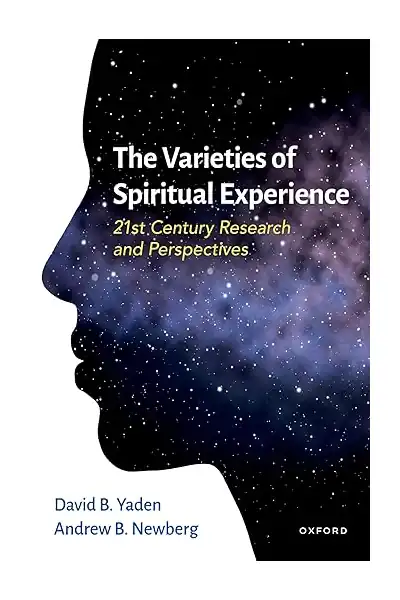
In "The Varieties of Spiritual Experience," David B. Yaden and Andrew Newberg undertake something both audacious and overdue: a comprehensive scientific update of William James's landmark 1902 work, bringing the study of spiritual experience into the twenty-first century with the tools of modern psychology, neuroscience, and empirical research. The title is a deliberate homage and a statement of intent. Where James relied on personal accounts, philosophical analysis, and the nascent psychology of his day, Yaden and Newberg draw on brain imaging studies, large-scale surveys, clinical trials, and decades of accumulated research to ask the same fundamental question James posed: what are spiritual experiences, and what do they tell us about human nature?
What makes this book particularly valuable is its refusal to choose between scientific rigor and genuine respect for the experiences being studied. Yaden, a psychologist at Johns Hopkins who researches self-transcendent experiences, and Newberg, a neuroscientist known for his pioneering brain imaging studies of prayer and meditation, approach spiritual experience as a real and significant phenomenon worthy of careful investigation—not as a delusion to be explained away or a sacred mystery that science must not touch. They map the current state of knowledge across the full range of spiritual experiences, from everyday feelings of awe and wonder to the most intense mystical states, from meditation and prayer to psychedelic experiences and near-death phenomena. For IMHU's community, this book provides the most current and comprehensive scientific foundation for taking spiritual experience seriously as a dimension of human life that belongs in mental health conversations.
A Taxonomy of Spiritual Experience
One of the book's most important contributions is its systematic mapping of the different types of spiritual experience, organized not by religious tradition but by the psychological and phenomenological features of the experiences themselves. This includes awe experiences—those moments when encountering something vast or beyond comprehension that requires a shift in one's mental frameworks. It includes self-transcendent experiences, in which the boundaries of the individual self seem to dissolve or expand. It includes mystical experiences characterized by a sense of unity, noetic quality, ineffability, and profound positive affect. And it includes near-death experiences, psychedelic experiences, and the spontaneous spiritual emergencies that are central to IMHU's mission.
This taxonomy matters because it allows researchers and clinicians to be precise about what they're discussing rather than lumping all spiritual experiences into a single undifferentiated category. Awe is not the same as mystical union, and a near-death experience is phenomenologically distinct from a meditation-induced state of consciousness. By distinguishing these experiences and identifying their shared and unique features, Yaden and Newberg create a framework that supports both scientific investigation and clinical assessment. A clinician encountering a patient who reports a powerful spiritual experience can use this taxonomy to understand what kind of experience occurred, what it typically involves, how it usually resolves, and whether it warrants clinical concern or simply respectful acknowledgment. This precision is exactly what's been missing from most clinical approaches to spiritual experience.
What Neuroscience Reveals and What It Doesn't
Newberg's decades of neuroimaging research provide some of the book's most fascinating material. Brain scans of people during intense prayer, deep meditation, and psychedelic experiences reveal consistent patterns of neural activity—decreased activity in the parietal lobe's orientation area (which maintains the sense of self and spatial boundaries), increased activity in frontal regions associated with attention and intention, and altered patterns of connectivity between brain networks. These findings demonstrate that spiritual experiences have real neurobiological correlates, which helps legitimize their study within mainstream science.
But Yaden and Newberg are admirably honest about what neuroimaging does and doesn't tell us. Finding that a mystical experience correlates with particular brain activity doesn't tell you whether the brain is generating the experience, receiving it, or filtering it. The brain shows activity during all conscious experiences—perceiving a sunset, remembering a childhood event, imagining a fictional scenario—but we don't conclude from this that sunsets, memories, or imagined worlds are "nothing but" brain activity. The same logical restraint should apply to spiritual experiences. The neural correlates of a mystical state tell us that the brain is involved, which is unsurprising, but they don't resolve the deeper question of whether the experience is pointing toward something real beyond the brain's activity. This nuanced position—taking neuroscience seriously without making it the final arbiter of what spiritual experiences mean—is precisely the kind of balanced engagement that the field needs.
The Psychedelic Renaissance and Spiritual Experience
The book devotes significant attention to the relationship between psychedelic experiences and spiritual experience, drawing on the remarkable resurgence of clinical psychedelic research at institutions like Johns Hopkins, NYU, and Imperial College London. Studies using psilocybin have found that under supportive conditions, a substantial percentage of participants report experiences that rank among the most meaningful and spiritually significant of their lives. These mystical-type experiences aren't incidental side effects—they appear to be the primary mechanism through which psychedelics produce their therapeutic benefits in treating depression, addiction, end-of-life anxiety, and PTSD.
This finding has profound implications for understanding spiritual experience itself. If a pharmacological intervention can reliably occasion experiences that participants rate as genuinely spiritual and deeply meaningful—experiences that produce lasting positive changes in attitudes, behavior, and wellbeing—then spiritual experience is clearly accessible through multiple doorways, not confined to any particular tradition or practice. It also suggests that the brain has built-in capacities for self-transcendence that can be activated under the right conditions. Yaden and Newberg use this research to argue that spiritual experience is a natural human capacity with identifiable triggers, characteristic features, and measurable outcomes—not an aberration or a privilege of the exceptionally devout. This normalization of spiritual experience as a fundamental human phenomenon is one of the book's most important contributions, and it aligns perfectly with IMHU's position that these experiences belong at the center of our understanding of mental health, not at its margins.
Benefits, Risks, and the Question of Integration
Yaden and Newberg don't shy away from the fact that spiritual experiences, while often profoundly beneficial, can also be destabilizing, frightening, and psychologically damaging when they occur without adequate support or context. The research shows that intense mystical or self-transcendent experiences can trigger lasting positive transformation, but they can also precipitate spiritual emergencies, exacerbate existing mental health conditions, or leave people struggling to integrate experiences that don't fit any framework available to them. The book takes both sides of this equation seriously.
This balanced assessment leads naturally to questions of integration—how people make sense of and incorporate powerful spiritual experiences into their ongoing lives. The authors argue that the context in which a spiritual experience occurs, the support available for processing it, and the meaning-making frameworks accessible to the individual all significantly influence whether the experience leads to growth or crisis. A mystical experience during a structured meditation retreat with experienced teachers available for guidance is likely to unfold very differently from the same experience erupting spontaneously during a period of high stress with no support system in place. This analysis has direct clinical implications: mental health professionals need to understand not just the phenomenology of spiritual experiences but the conditions that determine whether those experiences are integrative or destabilizing. It's an argument for exactly the kind of informed, spiritually literate clinical care that IMHU has been advocating for.
Updating William James for a New Century
What ultimately distinguishes this book is its successful fulfillment of the promise embedded in its title. William James's original "Varieties" argued that spiritual experience was a natural phenomenon worthy of scientific study, that it appeared across cultures and traditions in recognizable forms, and that its effects on people's lives were real and significant regardless of one's metaphysical commitments. More than a century later, Yaden and Newberg show that the empirical evidence has overwhelmingly vindicated James's intuitions. Spiritual experiences are real, they're measurable, they occur with predictable features across diverse populations, they produce lasting effects on brain function and psychological wellbeing, and they represent a fundamental dimension of human experience that no adequate psychology can afford to ignore.
The book also inherits James's philosophical generosity—his willingness to take spiritual experience seriously on its own terms rather than rushing to reduce it to something more scientifically palatable. Yaden and Newberg are working scientists who publish in peer-reviewed journals and use the most rigorous available methods. But they're also honest about the limits of those methods, acknowledging that the subjective, first-person dimension of spiritual experience may be irreducible to third-person scientific description. This intellectual humility, combined with genuine empirical rigor, makes the book a model for how the science of spiritual experience should be conducted. For IMHU, it provides what might be the single most useful reference for demonstrating to skeptics that taking spiritual experience seriously isn't a departure from science but an expression of science at its most curious, most honest, and most complete.