


Summary
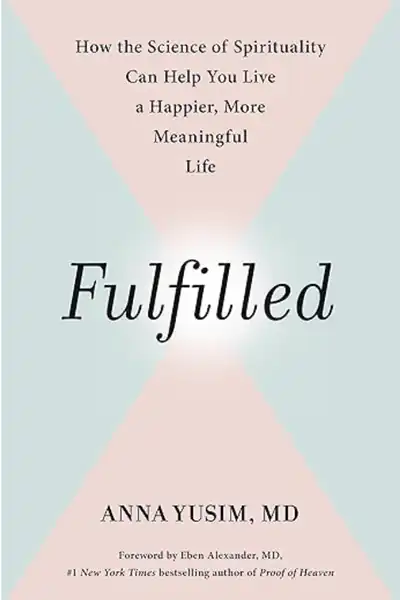
Dr. Anna Yusim's "Fulfilled: How the Science of Spirituality Can Help You Live a Happier, More Meaningful Life" bridges psychiatry and spirituality in a way that speaks to both skeptics and seekers. Published in 2017, this book draws on Yusim's work as a Yale and Stanford-trained psychiatrist who experienced her own spiritual awakening and subsequently integrated contemplative practices and spiritual perspectives into her clinical work. Rather than presenting spirituality as alternative to psychiatric care, she demonstrates how spiritual practices and meaning-making can complement conventional treatment to support fuller wellbeing.
What makes Yusim's approach valuable is her dual credibility. She speaks the language of evidence-based medicine while also honoring the transformative power of meditation, prayer, gratitude practices, and connection to something transcendent. She doesn't ask readers to accept claims on faith but rather presents research on how spiritual practices affect brain function, mental health outcomes, physical wellbeing, and quality of life. At the same time, she shares personal stories and patient examples illustrating how spirituality provides resources that psychiatric treatment alone cannot offer.
For IMHU's mission, "Fulfilled" represents exactly the kind of integrative thinking needed: honoring both scientific rigor and spiritual validity, recognizing that wellbeing requires addressing meaning and transcendence alongside symptoms and functioning, and creating frameworks where people can access both psychiatric care and spiritual support without having to choose between them. Yusim models how mental health professionals can incorporate spiritual dimensions into their work while maintaining clinical responsibility and evidence-based practice.
The Research on Spirituality and Wellbeing
Yusim begins by surveying research demonstrating that spiritual practices and religious involvement correlate with better mental and physical health outcomes. Studies show that people with active spiritual lives tend to experience less depression and anxiety, recover more quickly from illness, have stronger immune function, live longer, report higher life satisfaction, and show better resilience in facing adversity. Meditation practices produce measurable changes in brain structure and function, reducing activity in regions associated with stress and anxiety while enhancing areas involved in attention, emotional regulation, and compassion.
These correlations don't prove causation, and Yusim acknowledges the complexity. Are spiritual practices directly beneficial, or do they work through mechanisms like social connection, healthy lifestyle behaviors, or psychological factors like optimism and purpose? Probably all of the above. But regardless of mechanisms, the evidence suggests that attending to spiritual dimensions of life promotes wellbeing in ways that purely secular approaches may miss. People need meaning, purpose, connection to something transcendent, practices that cultivate inner peace, and communities that provide belonging and support.
For IMHU, this research base provides important validation. The organization's emphasis on spiritual dimensions of wellbeing isn't New Age wishful thinking but aligns with robust empirical findings. People experiencing mental health challenges often benefit from spiritual practices and meaning-making alongside or even more than conventional treatment alone. IMHU's integrative vision—combining psychiatric care when needed with spiritual support and practices—reflects emerging best practices grounded in evidence about what actually promotes human flourishing.
Meaning and Purpose as Foundation
Yusim emphasizes that humans are meaning-making creatures who need purpose and connection to something larger than ourselves to truly flourish. Research on logotherapy (Viktor Frankl's approach emphasizing meaning) shows that people who find their lives meaningful cope better with suffering, demonstrate greater resilience, and experience higher wellbeing even in difficult circumstances. Conversely, lack of meaning contributes to depression, anxiety, addiction, and even suicide. We can have all our material needs met and still experience profound emptiness if we lack sense of purpose.
Spiritual frameworks provide one powerful way people construct meaning: through connection to God or transcendent reality, participation in religious communities and traditions, service to others as spiritual practice, understanding suffering as opportunity for growth, and framing life as part of larger cosmic story or spiritual evolution. These frameworks aren't the only sources of meaning, but they've served billions of people across history and continue offering resources that purely secular worldviews may struggle to provide, especially around questions of suffering, mortality, and ultimate significance.
For IMHU's work, this validates attending to existential and spiritual dimensions alongside clinical symptoms. When someone experiences depression or anxiety, medication and therapy may help manage symptoms, but without addressing underlying questions of meaning and purpose, recovery may be incomplete. Many people seeking IMHU's support are grappling with profound existential questions catalyzed by spiritual emergence. Helping them find or construct meaningful frameworks for understanding their experiences is therapeutic work as important as any psychiatric intervention.
Practical Spiritual Practices for Daily Life
Yusim provides practical guidance on incorporating spiritual practices into everyday life without requiring religious affiliation or metaphysical beliefs. Meditation cultivates present-moment awareness and emotional regulation. Gratitude practices shift attention toward appreciation and abundance. Loving-kindness meditation develops compassion for self and others. Prayer or intention-setting creates ritual space for reflection and connection. Service to others provides purpose and takes us beyond self-absorption. Nature connection facilitates wonder and perspective. Journaling supports self-reflection and meaning-making.
The key is consistency and integration rather than intensity. Even brief daily practices—10 minutes of meditation, writing three things you're grateful for, brief prayer or intention-setting—can produce meaningful benefits when sustained over time. Yusim emphasizes meeting people where they are: if formal meditation feels inaccessible, try mindful walking or eating. If prayer feels foreign, try expressing gratitude or setting intentions. The goal is finding practices that resonate individually and can be sustained as regular habits.
For IMHU, these practical recommendations model how to support spiritual development accessibly. Not everyone experiencing spiritual emergence has established contemplative practice or religious framework. Many need basic tools for cultivating spiritual awareness, managing intensity of experiences, staying grounded while opening to transcendent dimensions. The straightforward, evidence-based practices Yusim recommends provide entry points suitable for people from any background, helping them develop resources for engaging with spiritual dimensions of their experience.
Integration Rather Than Opposition
Throughout the book, Yusim models integration rather than opposition between psychiatric and spiritual approaches. She describes patients who benefit from both antidepressant medication and meditation practice, both psychotherapy and prayer, both professional treatment and spiritual community. She doesn't present these as either/or choices but rather as complementary resources addressing different dimensions of wellbeing. Medication may help regulate neurotransmitters. Therapy may address trauma and develop coping skills. Spiritual practices may provide meaning and transcendent connection. All can contribute to fuller recovery and ongoing flourishing.
This both/and approach contrasts with polarized positions that either dismiss spirituality as irrelevant to mental health or reject psychiatric treatment in favor of spiritual practices alone. Yusim demonstrates that thoughtful clinicians can honor both domains, recognizing that some people need medical intervention while also benefiting from spiritual support, that science and spirituality address different questions and can coexist productively, and that genuine integration serves people better than either reductionist position.
For IMHU's mission, Yusim's integrative approach provides a clinical model. The organization aims not to replace psychiatry with spirituality but to create spaces where both are available and can work together. Yusim shows this is feasible within conventional practice settings when clinicians develop spiritual literacy, comfort discussing existential concerns, knowledge of contemplative practices, and relationships with spiritual care providers for referral and collaboration. Her work demonstrates that integration doesn't require abandoning evidence-based medicine but rather expanding what evidence we attend to and what dimensions of human experience we address.
The Transformation Journey
Yusim concludes by describing fulfillment as ongoing journey rather than destination reached. Spiritual growth involves cycles of opening and integration, breakthrough and consolidation, expansion and grounding. People may experience profound moments of connection or insight but then need to integrate these into daily life. Practices that once felt transformative may become routine, requiring renewal or deepening. New challenges arise demanding application of spiritual resources in fresh ways.
She emphasizes that spiritual development doesn't mean constant peak experiences or perpetual bliss. It means cultivating capacity to be present with all of life—joy and suffering, connection and loneliness, clarity and confusion. It means developing resilience, compassion, wisdom, and peace that can sustain us through inevitable difficulties. And it means building lives structured around what matters most: relationships, service, meaning, growth, and connection to something transcendent that gives our brief existence significance beyond just personal pleasure or achievement.
For IMHU's work with people experiencing spiritual emergence, this developmental perspective is crucial. Emergence isn't something to get through and move past but rather initiation into ongoing spiritual development. People may need support not just during crisis but for years afterward as they continue unfolding insights, developing practices, building lives that honor their deepened awareness. Yusim's vision of fulfillment as lifelong journey validates IMHU's emphasis on sustained support, community, and practices that can carry people forward after acute emergence settles. The goal isn't returning to pre-emergence functioning but rather growing into new ways of being that integrate expanded consciousness with embodied, relational, meaningful human life.