


Summary
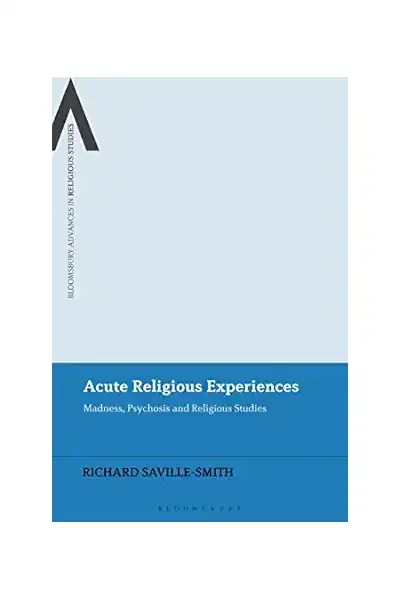
Richard Saville-Smith's "Acute Religious Experiences" ventures into territory where religious studies scholars often fear to tread: the messy, confusing, sometimes terrifying overlap between intense religious experience and what psychiatry calls psychosis. Published in 2022, this book argues that religious studies has largely abandoned people experiencing acute religious crises, ceding the field entirely to psychiatric and medical frameworks that treat these experiences as nothing more than symptoms of brain pathology requiring pharmaceutical correction.
What makes Saville-Smith's intervention crucial is his insistence that religious studies has something essential to contribute that psychiatry alone cannot provide. He's not arguing against psychiatric care or denying that some people experiencing acute religious states need medical intervention. Rather, he demonstrates that reducing these experiences to mere pathology erases their religious meaning, cultural context, and potential significance for the people living through them. Religious studies can help us read these experiences more carefully, attending to their symbolic content, their relationship to religious traditions and practices, and the meanings people construct from them.
The book draws extensively on first-person accounts from people who've experienced acute religious crises—states involving visions, voices, encounters with divine or demonic forces, cosmic revelations, radical transformations of identity and worldview. Saville-Smith shows how these accounts resist easy categorization as either "genuine" religious experience or "mere" psychosis. They're complex, ambiguous, often deeply troubling experiences that demand nuanced interpretation rather than reduction to either theological or medical frameworks. For IMHU's work, this book provides crucial methodological guidance: how to take seriously both the psychiatric and religious dimensions of acute experiences without collapsing one into the other, and how to support people in making meaning from experiences that mainstream institutions typically pathologize or dismiss.
The Poverty of Psychiatric Reductionism
Saville-Smith opens by documenting how psychiatric frameworks systematically strip acute religious experiences of their meaning and context. When someone reports encountering God, hearing divine voices, experiencing mystical union, or receiving cosmic revelations, psychiatric evaluation typically translates these into symptom categories: auditory hallucinations, grandiose delusions, dissociative states. The religious content becomes irrelevant—what matters is identifying the underlying pathology and prescribing appropriate treatment to eliminate the symptoms.
This reductive approach, Saville-Smith argues, does violence to the experiences themselves and to the people having them. It ignores the specific religious and cultural frameworks that shape how people understand and respond to these states. It dismisses as meaningless the very content that feels most significant to the experiencer. A Christian mystic's encounter with Christ, a Hindu devotee's vision of Krishna, a Buddhist practitioner's experience of emptiness—all get flattened into generic "hallucinations" requiring the same pharmaceutical response regardless of their wildly different meanings and contexts.
But the critique goes deeper. Saville-Smith shows how psychiatric reduction reflects specifically Western, secular, post-Enlightenment assumptions about what counts as real and rational. These frameworks weren't designed to accommodate religious experience—they were developed in explicit opposition to religious worldviews, as part of modernity's project of secularizing human experience. When we use these tools to interpret acute religious states, we're not applying neutral scientific frameworks. We're imposing one cultural and philosophical perspective that systematically invalidates others. For IMHU, this analysis strengthens the case for developing alternatives that can honor both clinical safety and religious meaning without treating one as inherently more real than the other.
What Religious Studies Can Offer
Having critiqued psychiatric reductionism, Saville-Smith turns to what religious studies brings to understanding acute experiences. The discipline offers tools for reading these states in their full complexity: attending to their symbolic and metaphorical dimensions, situating them within specific religious traditions and practices, examining how they relate to canonical texts and established spiritual paths, understanding the cultural and historical contexts that shape their expression and interpretation.
Religious studies can recognize, for instance, that someone's experience of being pursued by demons might not be reducible to paranoid delusions but could represent a genuine spiritual crisis interpreted through Christian cosmology. That visions of deities might connect meaningfully to devotional practices and theological frameworks from Hindu or Buddhist traditions. That feelings of cosmic unity or dissolution of self might align with mystical states described across contemplative traditions. This doesn't mean these experiences aren't also connected to brain states or psychological processes—but it means we can't understand them adequately without attending to their religious content and context.
Saville-Smith also emphasizes that religious traditions have developed sophisticated frameworks for distinguishing authentic spiritual experience from delusion, for supporting people through intense states, for integrating transformative experiences into ongoing spiritual practice. These resources have been largely ignored by modern psychiatry, which often treats all religious content as equally suspect. By bringing religious studies perspectives into dialogue with psychiatric frameworks, we can develop richer, more nuanced understandings that serve people better than either approach alone. For IMHU's integrative mission, this demonstrates why expertise from religious studies is essential—not just helpful—for supporting people through spiritual emergence and crisis.
The Challenge of Interpretation
The book's most sophisticated contribution involves wrestling with fundamental questions of interpretation: how do we read and make sense of acute religious experiences that don't fit neatly into either "authentic spirituality" or "psychiatric pathology" categories? Saville-Smith argues that these experiences are inherently ambiguous and resist simple classification. They call for careful, context-sensitive interpretation rather than quick diagnostic judgments.
He develops what he calls a "non-reductive" approach to reading acute religious experiences. This means taking seriously both their religious content and their connection to distress, dysfunction, or mental illness. It means recognizing that an experience can be simultaneously pathological (in the sense of causing suffering and impairment) and religiously meaningful. That someone might genuinely need psychiatric medication while also needing religious community and spiritual interpretation of what's happening to them. The goal isn't determining whether an experience is "really" religious or "really" psychiatric—that's a false binary—but rather understanding it in its full complexity from multiple angles.
This interpretive approach requires what Saville-Smith calls "epistemological humility"—recognizing the limits of any single framework's ability to capture these experiences adequately. Religious studies can't tell us everything about acute states any more than psychiatry can. But bringing multiple disciplinary perspectives into dialogue creates possibilities for richer understanding than any single approach alone. For those supporting people through these experiences, this means being comfortable with ambiguity, resisting premature closure on what experiences "really are," and creating space for multiple valid interpretations to coexist. For IMHU, this provides methodological grounding for genuinely integrative practice that doesn't collapse into either religious or medical reductionism.
First-Person Accounts and Lived Experience
Throughout the book, Saville-Smith centers first-person accounts from people who've experienced acute religious crises. These narratives are powerful precisely because they resist the neat categories both psychiatry and religious studies often impose. People describe experiences that feel utterly real and profoundly meaningful while also acknowledging they were terrifying, disorienting, and sometimes required medical intervention. They report encounters with divine or demonic beings that transformed their lives while also recognizing these might connect to trauma, mental illness, or altered brain states.
What emerges from these accounts is how poorly current systems serve people at this intersection. Many describe being bounced between psychiatric services that dismissed their religious concerns and religious communities that couldn't handle their psychiatric needs. They felt forced to choose between having their experiences validated religiously but receiving no help with distress and dysfunction, or getting psychiatric treatment that stabilized them but invalidated the meaning they'd found in their experiences. Neither option adequately served their actual needs.
The accounts also reveal something crucial: people experiencing acute religious crises are often desperately trying to make sense of what's happening to them. They're engaged in active meaning-making, drawing on whatever resources—religious traditions, psychiatric frameworks, personal intuition, community support—they can access. The question isn't whether to impose meaning on their experiences but how to support their own interpretive work in ways that promote integration and wellbeing. For IMHU, these first-person accounts underscore the importance of approaches that empower people as active participants in understanding and integrating their experiences rather than passive recipients of either religious or psychiatric truth claims about what's "really" happening to them.
Toward Integrative Practice
Saville-Smith concludes by sketching what genuinely integrative approaches to acute religious experiences might look like. These would require collaboration between religious studies scholars, psychiatric professionals, spiritual care providers, and people with lived experience of these states. No single discipline or perspective has adequate resources alone—integration means bringing multiple forms of expertise into dialogue while centering the person's own understanding and needs.
Practically, this might mean psychiatric settings consulting with religious studies scholars or chaplains when patients present with acute religious content. It might mean spiritual communities developing relationships with psychiatrists who understand religious experience and can help with assessment and referral when needed. It requires training mental health professionals in basic religious literacy so they can recognize and respect the religious dimensions of experiences they encounter. And it means creating specialized settings—perhaps like IMHU envisions—where people can receive both psychiatric care and spiritual support without being forced to choose between them.
Perhaps most importantly, Saville-Smith argues for research that takes both religious and psychiatric dimensions seriously. We need studies examining outcomes for people who receive religiously informed care alongside psychiatric treatment compared to those who receive conventional psychiatric treatment alone. We need phenomenological research that attends carefully to how people actually experience and interpret acute states rather than imposing predetermined categories. We need to understand how different interpretive frameworks affect people's long-term wellbeing and integration of these experiences.
For IMHU's mission, this book provides both validation and practical direction. It confirms that the gap between religious and psychiatric approaches to acute experiences is real, consequential, and currently leaving people underserved. It demonstrates that religious studies has essential contributions to make that psychiatry alone cannot provide. And it sketches a path toward genuinely integrative practice grounded in intellectual rigor, respect for multiple forms of expertise, and deep commitment to serving people experiencing these profound, complex, often troubling states with the nuance and care they deserve.