


Summary
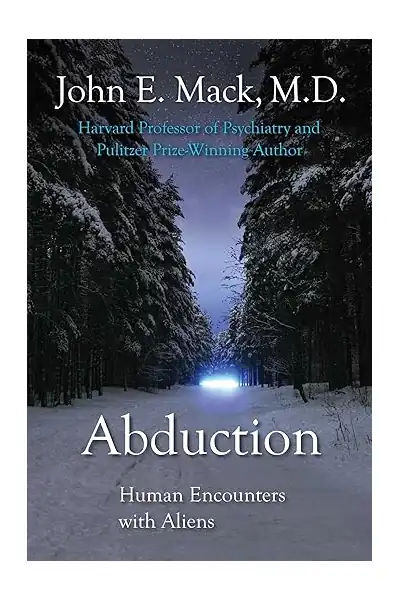
In "Abduction: Human Encounters with Aliens," John E. Mack—a Pulitzer Prize-winning Harvard psychiatrist—did something that nearly destroyed his career and remains one of the most provocative acts of intellectual courage in the history of American psychiatry: he took his patients seriously. The patients in question were people reporting experiences of being taken by non-human beings, subjected to various procedures, and returned with their lives permanently altered. Mack didn't set out to validate UFO mythology. He set out to understand why otherwise psychologically healthy, high-functioning people were reporting experiences so intense and consistent that they defied easy explanation by any conventional psychiatric framework.
What makes "Abduction" essential reading for IMHU's community isn't whether one believes in extraterrestrial visitors. It's what happens when a highly credentialed clinician encounters experiences that don't fit any existing diagnostic category and chooses to investigate rather than dismiss. Mack found that his subjects weren't psychotic, weren't suffering from dissociative disorders, weren't confabulating for attention, and weren't responding to cultural suggestion in any straightforward way. Their experiences had the phenomenological texture of real events, produced lasting psychological and spiritual transformation, and consistently challenged the materialist worldview that modern psychiatry takes for granted. Mack's willingness to sit with this clinical mystery—to resist the enormous professional pressure to explain it away—models exactly the kind of radical openness to anomalous experience that IMHU advocates for. The book isn't about aliens. It's about what happens when we encounter experiences our frameworks can't contain, and whether we have the courage to let the experiences reshape the frameworks rather than the other way around.
A Psychiatrist Confronts the Unexplainable
Mack's journey into this material began when he was approached by a colleague who thought the abduction phenomenon deserved serious psychiatric investigation. Initially skeptical, Mack agreed to meet with experiencers and quickly found himself in unfamiliar clinical territory. These weren't the kind of patients he was used to seeing. They presented with genuine distress, described experiences of extraordinary vividness and consistency, and showed none of the markers he would expect if their accounts were products of psychopathology. They weren't delusional—they questioned their own experiences constantly. They weren't attention-seeking—most had kept their experiences secret for years out of shame and fear. They weren't culturally primed—many had no prior interest in UFOs or science fiction.
What struck Mack most powerfully was the quality of the emotional material. Under hypnosis and in extended therapeutic work, his subjects accessed levels of terror, awe, grief, and transcendence that he recognized as clinically genuine—the kind of emotional depth that can't be easily fabricated or suggested. As a psychiatrist trained in psychodynamic methods, he knew what manufactured or suggested material looked like, and this wasn't it. He also noticed something that complicated any simple psychiatric explanation: the experiences often produced profound positive transformation. People emerged from their encounters with expanded ecological awareness, deepened spiritual sensitivity, reduced materialism, and a fundamentally altered sense of their place in the cosmos. Whatever was happening to these people, it was doing something that looked remarkably like the kind of transformative growth that spiritual traditions describe—and that conventional psychiatry has no category for.
Beyond the Limits of Diagnosis
The clinical challenge Mack faced was that no existing diagnostic category adequately captured what his subjects were experiencing. The experiences didn't fit the criteria for psychosis—the experiencers maintained reality testing in all other domains of their lives. They didn't fit the criteria for PTSD, though there were traumatic elements—the experiences had features that went far beyond the processing of past events. They didn't fit the criteria for dissociative identity disorder, though altered states of consciousness were involved. They didn't fit the criteria for factitious disorder or malingering—the experiencers derived no benefit from their accounts and often suffered significant social consequences for disclosing them.
Mack argued that this diagnostic failure wasn't a problem with the experiencers but a problem with the diagnostic system. The DSM is built on the assumption that all legitimate psychological experience can be explained within a materialist framework—that consciousness is produced by the brain, that reality is exclusively physical, and that experiences contradicting these assumptions must be pathological. When an experience simply doesn't fit any category in the manual, the system has only two options: force it into an ill-fitting category or declare it doesn't exist. Mack chose a third option: acknowledge that the experience is real for the person having it, investigate it on its own terms, and consider the possibility that it points toward aspects of reality that current science doesn't encompass. This methodological humility—the willingness to let data challenge paradigms rather than the other way around—is precisely what IMHU advocates for in the clinical encounter with any anomalous experience, whether it involves alien beings, spiritual entities, or states of consciousness that defy conventional explanation.
Transformation and Expanded Consciousness
One of the most striking and least discussed aspects of Mack's findings is that the abduction experience, despite its terrifying elements, frequently catalyzed profound personal and spiritual transformation. Experiencers reported a dramatically expanded sense of identity—moving from a narrow, ego-centered self-concept to a felt sense of connection with the cosmos, with the earth, and with dimensions of reality they hadn't previously perceived. Many developed heightened ecological awareness and a passionate commitment to environmental protection. Others reported psychic or intuitive capacities that opened after their encounters. Nearly all described a fundamental shift in their understanding of consciousness—a recognition that reality is far more vast, more layered, and more mysterious than the materialist worldview suggests.
These transformative outcomes present a genuine puzzle for any reductive explanation. If the experiences were simply traumatic—random neural firings, sleep paralysis, or recovered false memories—why would they so consistently produce psychological growth, expanded awareness, and spiritual deepening? Trauma that has no meaning typically produces fragmentation, not integration. What Mack's experiencers described looked much more like what the Grofs call spiritual emergency or what shamanic traditions describe as initiatory crisis: a terrifying encounter with non-ordinary reality that, when processed and integrated, produces lasting expansion of consciousness and capacity. Mack himself came to see the phenomenon as potentially connected to the broader category of transformative spiritual experience—a connection that made both the scientific establishment and the UFO community uncomfortable, but that the phenomenological evidence supported.
The Professional Cost of Intellectual Courage
The institutional response to Mack's work deserves attention because it reveals exactly the kind of paradigm enforcement that IMHU works to challenge. In 1994, Harvard Medical School took the unprecedented step of appointing a committee to investigate Mack's clinical practices—a process that many observers saw as an attempt to discredit and silence a tenured professor whose research conclusions embarrassed the institution. After a fourteen-month investigation, the committee found no grounds for disciplinary action and reaffirmed Mack's academic freedom. But the message was clear: investigating experiences that challenge materialist assumptions carries serious professional risk, even at institutions that pride themselves on intellectual freedom.
Mack's experience illustrates a dynamic that affects researchers across the spectrum of anomalous experience. Scientists who study near-death experiences, psychic phenomena, mediumship, or the therapeutic potential of psychedelics all face similar professional pressures—subtle and not-so-subtle signals that certain questions are career-endangering to pursue. The result is a chilling effect that limits the range of human experience science is willing to investigate. Researchers self-censor, avoiding topics that might attract institutional scrutiny, and the field's understanding of consciousness remains artificially narrow. Mack refused to self-censor, and his case became a landmark in the ongoing struggle over what questions science is permitted to ask. For IMHU, his story serves as both a warning about the forces that resist paradigm expansion and an inspiration about the courage required to pursue truth wherever it leads.
Opening the Question of What's Real
Perhaps Mack's most lasting contribution is methodological rather than substantive. He didn't prove that alien beings are visiting Earth. He demonstrated that the question of what constitutes "real" experience is far more complex than either materialist science or popular culture acknowledges. His experiencers reported encounters that didn't fit comfortably into any existing category: not quite physical events in the conventional sense, not quite psychological experiences in the internal sense, not quite spiritual visions in the religious sense, but possessing qualities of all three. Mack suggested that these experiences might occur in a domain that Western culture has largely lost the capacity to recognize—what some traditions call the imaginal realm, a level of reality that is neither purely physical nor purely mental but participates in both.
This ontological question—whether there exist dimensions of reality beyond the physical and the psychological as currently understood—is ultimately the question that unites Mack's work with IMHU's broader mission. When someone reports an encounter with a spiritual being, a deceased relative, a divine presence, or a non-human intelligence, the materialist framework offers only two interpretations: it really happened in physical space (which science deems impossible) or it's a product of brain malfunction (which dismisses the person's experience). Mack insisted on a third possibility: that consciousness can access dimensions of reality that our current scientific paradigm doesn't encompass, and that experiences arising from these encounters are neither hallucinations nor physical events but something for which we don't yet have adequate language. This insistence on holding the question open—refusing premature closure in either the skeptical or the credulous direction—is one of the most valuable intellectual postures available to anyone working at the intersection of consciousness, spirituality, and mental health.