Brain Scans Reveal Ayahuasca's Impact
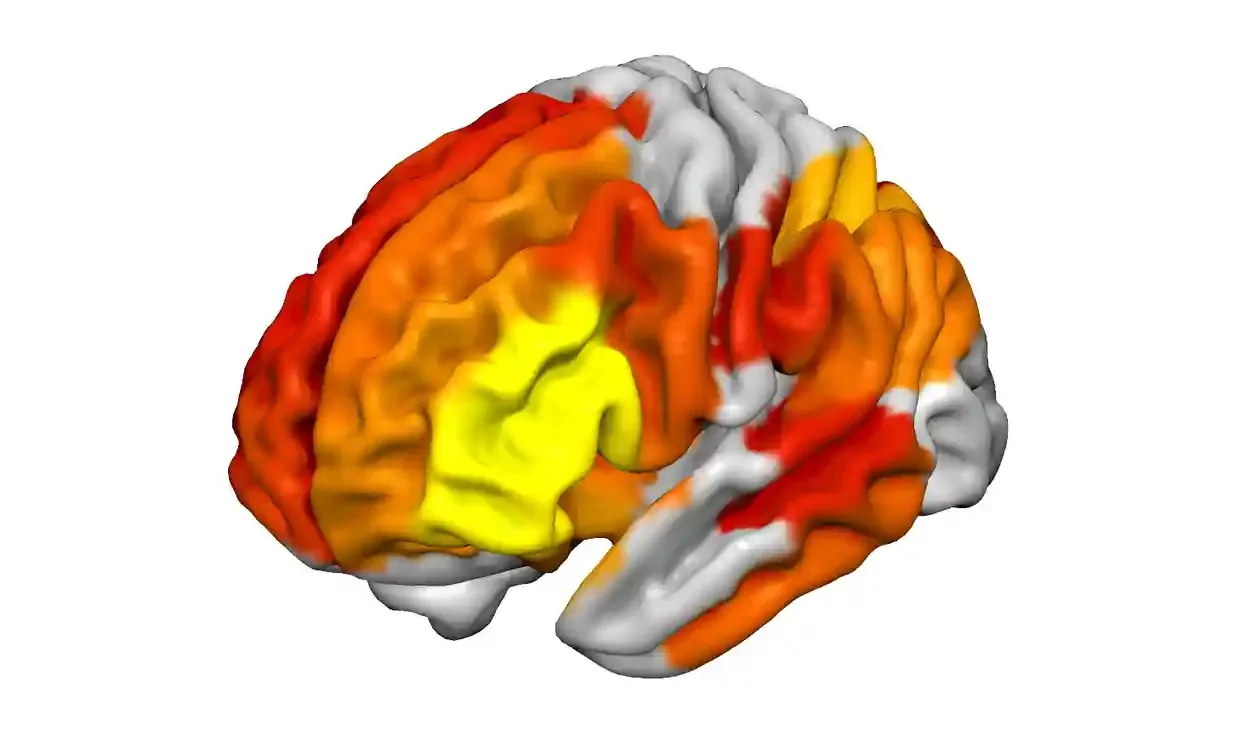
DMT Study gives most advanced picture yet of DMT compound’s effect on advanced functions such as imagination.
Functional magnetic resonance imaging (fMRI) scan of a brain shows regions of increased connectivity on DMT. Photograph: Christopher Timmermann, Imperial College London.
DMT's Impact
The brew is so potent that practitioners report not only powerful hallucinations, but near-death experiences, contact with higher-dimensional beings, and life-transforming voyages through alternative realities. Scientists have now monitored the brain on DMT, or dimethyltryptamine, the psychedelic compound found in the flowering shrub mashed up and boiled in the Amazonian drink ayahuasca. The recordings reveal a profound impact across the brain, particularly in areas that are highly evolved in humans and instrumental in planning, language, memory, complex decision-making and imagination.
DMT Study
For the latest study, Chris Timmermann, head of the DMT research group at Imperial College London, recruited 20 healthy volunteers who received a 20mg injection of DMT and a placebo on separate visits to the lab. Using EEG and fMRI, the scientists recorded the participants’ brain activity before, during and after the drug took hold. The results, published in the journal PNAS, provide the most advanced picture yet of the human brain on psychedelics.
DMT, Psychotherapy, and Consciousness
This ability to make brain activity more fluid and flexible is thought to underpin not only the profound psychedelic experience but the promising results from early clinical trials of DMT in combination with psychotherapy to treat depression.
Published first in The Guardian, March 20, 2023. Author: Ian Sample, Science editor.
IMHU.org offers several courses on the risks and benefits of psychedelic assisted psychotherapy: Psychedelic Medicine: Is it Good? and Ayahuasca Use: Risks and Benefits.