Supporting Youth in Navigating Challenging States of Consciousness: To Improve Resilience, Self-Awareness, and Connection
Learn effective ways to support youth having extraordinary experiences resulting from stress, near-death experiences, experimenting with psychedelics, meditation, yoga, and more. October 6-27, 2026 • Tuesdays 2-4pm EDT.


2pm ET

Who This Is For
For Parents & Family Members
If your child, teen, or young adult is experiencing aspects of consciousness expansion that can be frightening, you're not alone. This course is designed for parents and caregivers of young people who want to understand what their child is experiencing, learn how to communicate effectively without pathologizing, and advocate for appropriate care. You'll gain practical tools for supporting them at home and navigating conversations with schools, therapists, and doctors.
For Professionals, Educators & Caregivers
This course is designed for those working with youth in clinical, educational, pastoral, coaching, or community settings: psychologists, therapists, counselors, social workers, school counselors, psychiatrists, educators, youth program leaders, chaplains, and professionals working with highly sensitive or neurodivergent youth. It's a strong fit for those who sense conventional biomedical frameworks are sometimes too narrow and want clinically responsible language for non-ordinary experience.
Why Youth Need Specialized Support


Why Getting This Right Matters for Young People
Misdiagnosis Can Derail Development
Too often, youth experiencing consciousness expansion are diagnosed with schizophrenia, bipolar disorder, or psychotic breaks and given heavy medications they may not need. Wrong treatment at this critical developmental stage can have lifelong consequences. They deserve accurate assessment by professionals who understand non-ordinary experiences.
Identity Is Being Formed Right Now
Adolescence and young adulthood is when identity crystallizes. How a young person makes sense of their expanded consciousness becomes part of who they are. Pathologizing these experiences can create a "mentally ill" identity. Supporting healthy integration creates a resilient, self-aware identity.
Isolation Can Intenify Into Crisis
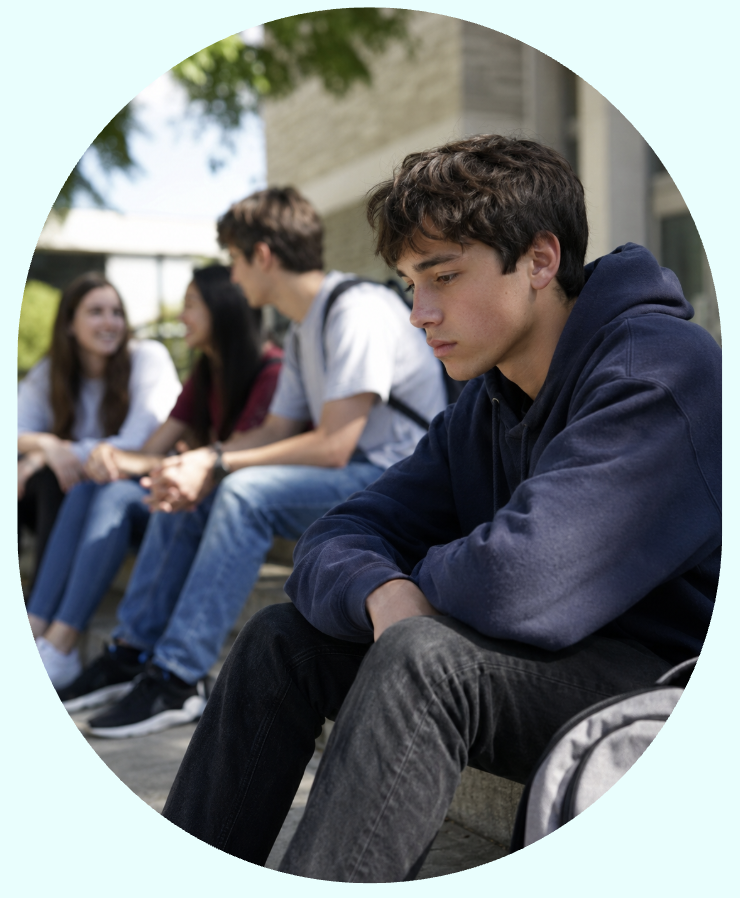
Youth who can't talk about their experiences—because they fear being called "crazy" or dismissed—suffer in silence. This isolation itself can escalate the crisis. Peer support and understanding from adults can be life-saving. Young people need to know they're not alone and they're not broken when they have experiences of consciousness expansion.
These Experiences Can Catalyze Profound Growth
With proper support, challenging consciousness expansion in youth often lead to increased empathy, emotional intelligence, clarity of purpose, and resilience—exactly the qualities we want to nurture in young people. This isn't just about managing symptoms; it's about supporting healthy development.
What to Expect
Dates
October 6-27, 2026. Four consecutive Tuesday sessions beginning October 6th and ending October 27th.
Time Commitment
Tuesdays from 2-4pm ET, 7-9pm in UK, 8-10pm in EU. Four weekly sessions over the course of one month.
Format
Youth who can't talk about their experiences—because they fear being called "crazy" or dismissed—suffer in silence. This isolation itself can escalate the crisis. Peer support and understanding from adults can be life-saving. Young people need to know they're not alone and they're not broken.
CE Credits
8 CE credits available for licensed professionals. However, it is not necessary to be a professional to take the course. It is available to parents, family members, and others who also work with and support youth.
Learning Objectives

Differentiate among psychiatric crisis, trauma-related dysregulation, dissociation, developmental distress, and spiritually transformative or non-ordinary experiences in youth and young adults
Explain how differing assumptions about the nature of consciousness shape clinical assessment, language, and intervention choices
Situate youth extreme states within the broader social, cultural, technological, and developmental context shaping this generation
Recognize the 12 major categories of spiritually transformative experience and how they may present in youth, both internally and outwardly
Identify how unusual experiences are commonly misunderstood, over-pathologized, or mishandled in school, clinical, and family systems
Respond to youth in extreme states with greater relational safety, discernment, and ethical clarity
Apply practical stabilization, grounding, communication, and referral strategies without overstepping professional scope of practice
Identify red flags and clinical thresholds that require urgent psychiatric, medical, or crisis intervention
Communicate more effectively with families, school teams, and multidisciplinary providers when a young person presents with unusual or spiritually charged experiences
Build a personalized resource map and response framework suited to your professional setting and community
What You Will Take Away
Course Curriculum
A comprehensive 4-session live course teaching you how to support youth (ages 13-26) experiencing overwhelming spiritual or consciousness-related experiences from stress, trauma, psychedelics, meditation, or spontaneous awakening.
Taught by experts: Dr. Emma Bragdon (pioneer in body-mind-spirit wellness) & Dr. Janis Whitlock (adolescent mental health specialist)
October 6-27, 2026: Tuesdays 2-4pm EDT (4 weekly sessions, all recorded)
For everyone: Parents, grandparents, teachers, counselors, healthcare providers—no license required
8 CE credits available for licensed professionals (optional add-on)
Session 1: Understanding Extreme States in Youth

 Establish the territory: what counts as an extreme state, why conventional frameworks often fall short, and how the current developmental landscape shapes youth distress and meaning-making.
Session 2: Consciousness, Worldview, and the Interpretive Frame
- Help participants recognize that their inherited assumptions about consciousness already shape what they notice, how they assess, and what they treat—and invite a more expansive, non-dogmatic model.
Session 3: Mapping the Territory: Awakening, Expanded Perception, and Discernment
- Provide participants with a concrete map of non-ordinary experience and build skill in distinguishing destabilization from transformation—and both from acute psychiatric crisis.
Session 4: Supporting Youth Responsibly: Stabilization, Communication, Referral, and Systems Response
- Translate conceptual understanding into concrete professional action—what to do, what to avoid, when to escalate, and how to communicate across systems.
Your Instructors
Emma Bragdom, PhD
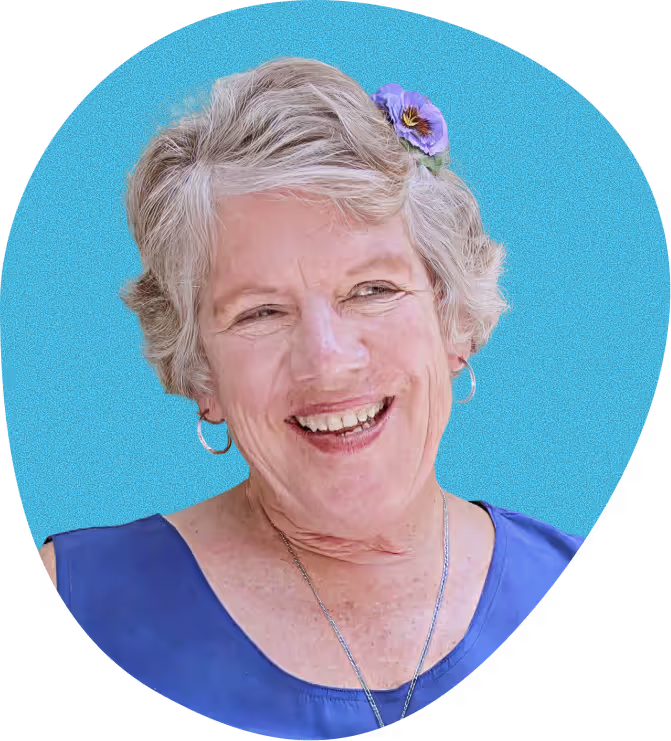
Dr. Emma Bragdon is a pioneer in body–mind–spirit wellness with 50 years of experience in integrative approaches to mental health, healing, and human development. She has written seven books, co-produced two documentary films, and has taught experiential learning for adults since 1985. Emma volunteered with the Spiritual Emergence Network (SEN) for seven years, editing their journal and coordinating conferences at Esalen Institute with founders Stanislav and Christina Grof. Her PhD dissertation, "How to Support Someone in Spiritual Emergency," launched a lifelong specialization in this field. From 2001–2012, she conducted field research at Spiritist Community Centers and Psychiatric Hospitals in Brazil, studying their 120-year-old model of integrative care. Since 2012, she has served as "ambassador" to non-Brazilians for the Spiritist Psychiatric Hospital in Goiânia, Brazil, facilitating seminars for health professionals worldwide.

Janis Whitlock, PhD, MPH
Janis is a psychologist and public health specialist with 35+ years of U.S. and international experience in adolescent and young adult mental health, social media and mental health, sexual health, and violence prevention. She has worked as a researcher, program developer and evaluator, public speaker, trainer, curriculum designer, and consultant to schools, universities, parents, nonprofits, community organizations, social media platforms, and pro-social corporate teams. She is a research scientist emerita at Cornell University, a 2022 Francqui International Professor at VUB in Belgium, and founder/director of Self-Injury Recovery Resources. Her work also explores ontological shock, consciousness, polycrisis, UAP, and anomalous phenomena.
Ready to learn how to support youth in navigating challenging states of consciousness?
Frequently Asked Questions

No. This course is for all people interested in being of support to youth and young adults. However, we will be giving important practical information for counselors and teachers to use in their work with young people.
Yes. You will get a Course Completion Certificate when you complete the course to document your participation.
Yes. You will learn more about why our youth are having so many mental health issues and what we can all do to help them feel better.
We are not psychiatrists and will not be recommending medications. We do believe that psychiatric medication has a place in care. We also believe that there has been an over-reliance on medications that has been hurtful for some youth and young adults. Therefore, we will recommend complementary ways of being of support to youth and young adults which apply to those on medication and those who choose not to be on medication.
While many participants are clinicians or counselors, the course is designed for anyone who works closely with young people — including educators, coaches, youth program staff, and parents. The material is presented with clinical rigor but in language accessible to a range of backgrounds.
Yes, directly. One of the most common situations this course addresses is how to understand and respond when a young person has had an intense, destabilizing, or confusing experience related to substance use — including cannabis and psychedelics. You'll come away with practical tools for assessing what's happening and how to support recovery and integration without overreacting or underreacting.
No. The course takes a rigorous, balanced approach. We believe psychiatric care and medication are sometimes essential and potentially life-saving. What we're offering is an expanded interpretive framework — one that helps professionals and caregivers recognize when conventional approaches are sufficient, when they may be missing something important, and when a more nuanced response is called for. Our aim is better discernment, not the dismissal of any particular approach.
Most professional trainings focus on diagnosing and treating recognized mental health conditions. This course addresses territory that falls outside or alongside those frameworks — including experiences like expanded perception, energetic sensitivity, existential crisis, and consciousness expansion that can be genuinely distressing but may not fit neatly into a diagnostic category. We help participants develop the skills to hold that complexity responsibly.
Very much so. The course is designed to be clinically credible and professionally serious. You don't need to use transpersonal or spiritual language in your workplace to apply what you learn. We give participants concrete tools — frameworks, language, case formulation approaches — that translate into any professional context, including those where consciousness-inclusive ideas are unfamiliar or unwelcome.
We recommend attending live when possible, since discussion and case consultation are central to the learning experience. However, recorded versions of the didactic portions of each session will be available to enrolled participants. Please note that live attendance is required for continuing education credit.
About Continuing Education Credits
For licensed health professionals seeking CE credits for license renewal

CE Provider Information
CE credits are provided by Westbrook University, an APA-approved continuing education provider for healthcare professionals.
Words of Praise for
imhu
professionally. I feel as though anyone could benefit from the information provided throughout. I’ve found myself becoming more grounded and aware of other’s situations
both at work and in my daily life.